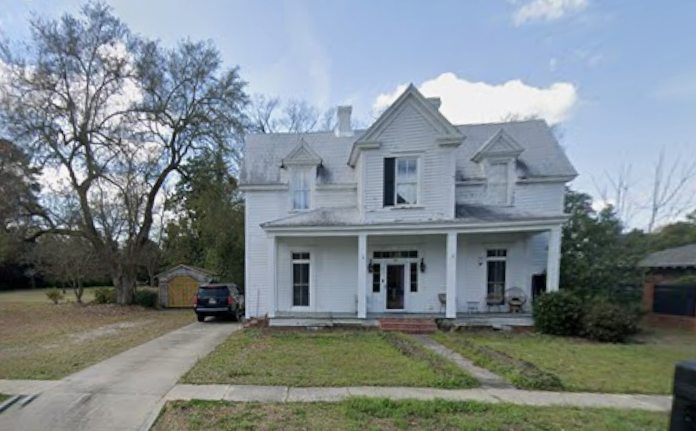
Couch-Rose House ca 1880
Constructed circa 1880, the Couch-Rose House is a notable example of late nineteenth-century residential architecture in Batesburg-Leesville and reflects the prosperity and growth experienced by the community during the decades following the arrival of the railroad. Built during a period when the neighboring towns of Batesburg and Leesville were emerging as important agricultural and commercial centers in the South Carolina Midlands, the residence is associated with the Couch and Rose families, both of whom contributed to the civic, agricultural, and business life of the community. The house stands as a reminder of the stability and success enjoyed by many local families whose investments helped shape the character and development of the town during the Victorian era.
The residence displays many of the architectural characteristics associated with vernacular Victorian design, while incorporating regional building traditions common throughout Lexington County. The frame dwelling is distinguished by its irregular massing, steeply pitched roofline, and projecting gables that create a visually engaging silhouette. A spacious wraparound porch, supported by turned wooden posts and accented with decorative brackets and ornamental spindlework, provides both architectural refinement and an inviting outdoor living space suited to the South Carolina climate. Tall double-hung sash windows, weatherboard siding, and finely crafted wood trim further demonstrate the quality workmanship and attention to detail that characterized residential construction during the late nineteenth century.
Occupying a prominent residential lot, the Couch-Rose House contributes significantly to the historic streetscape of Batesburg-Leesville. Its mature landscaping, generous setbacks, and relationship to neighboring historic homes illustrate the orderly residential development that accompanied the town’s economic expansion during the late nineteenth and early twentieth centuries. The house retains much of its historic character and continues to reflect the craftsmanship, materials, and design principles that defined domestic architecture during this important period of community growth.
Today, the Couch-Rose House remains an important component of Batesburg-Leesville’s architectural heritage. Through its association with prominent local families and its well-preserved Victorian character, the residence serves as a tangible link to the community’s formative years, embodying the prosperity, craftsmanship, and civic pride that helped establish Batesburg-Leesville as one of the South Carolina Midlands’ most enduring historic communities.