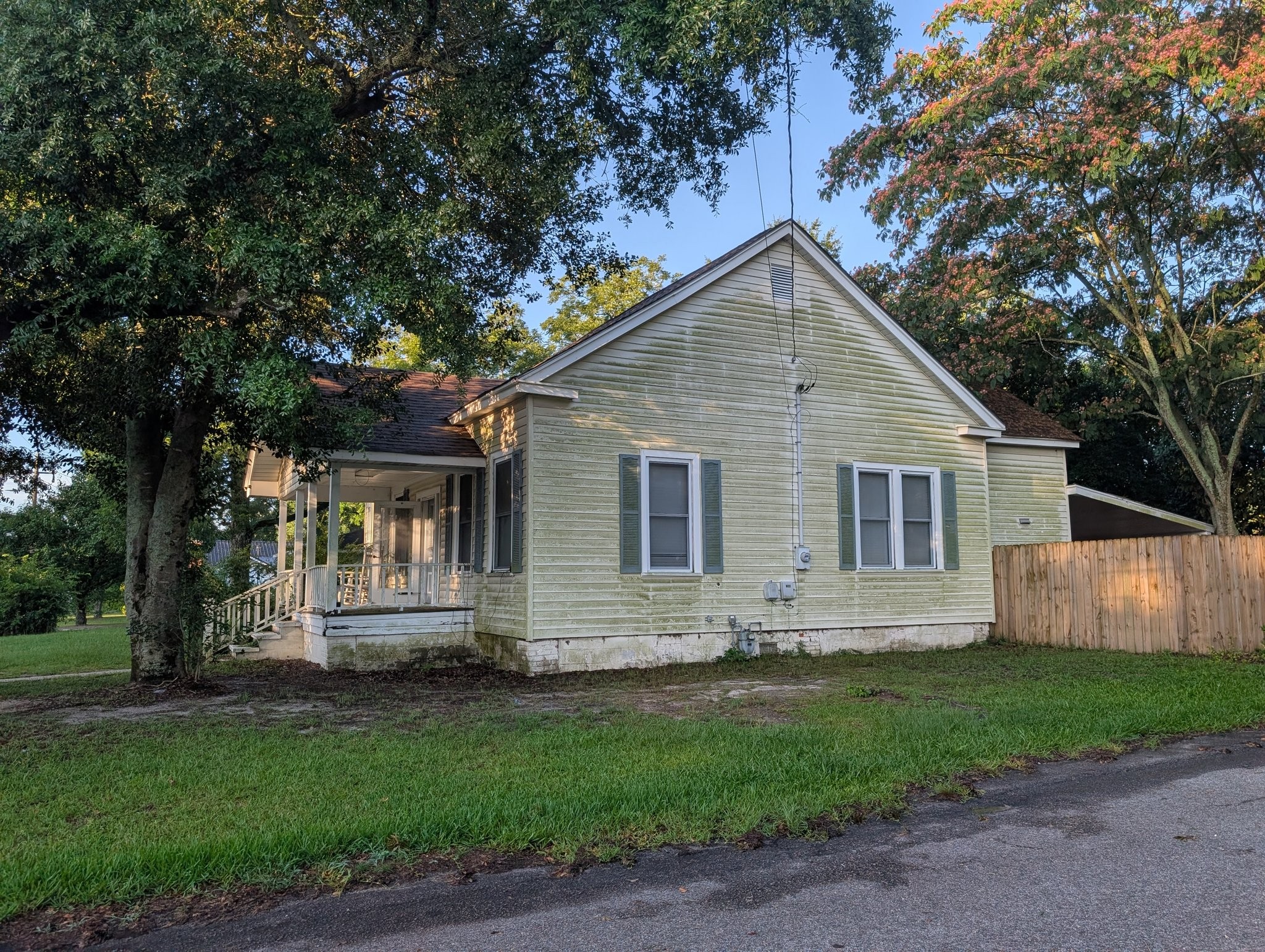
Corbitt House ca 1920
Constructed circa 1920, the Corbitt House is a noteworthy example of early twentieth-century residential architecture in Salley, South Carolina. Built during a period of stability and prosperity following the town’s rapid growth in the railroad era, the residence reflects the evolving architectural tastes and comfortable domestic lifestyles that characterized small-town South Carolina during the years after World War I. As a contributing resource within the historic community, the house serves as a tangible reminder of Salley’s continued development as a center of commerce, agriculture, and civic life.
The residence exhibits the balanced proportions and inviting character commonly associated with homes of the period. Its design emphasizes both practicality and architectural refinement, incorporating features intended to enhance comfort in the Southern climate. Broad porches, generous window openings, and carefully crafted exterior detailing create an attractive streetscape presence while reflecting the influence of popular residential styles that spread throughout South Carolina during the early twentieth century. The house’s scale and workmanship suggest the aspirations of a growing middle class that valued both permanence and aesthetic appeal.
Associated with the Corbitt family, the dwelling represents the importance of family, community, and local enterprise in the history of Salley. Like many of the town’s substantial residences, the house stood as a symbol of personal achievement and stability, providing a home for generations while contributing to the social fabric of the community. Its location among other historic residences illustrates the development of Salley’s residential neighborhoods during a period when the town’s commercial success supported continued investment in quality housing.
Today, the Corbitt House remains an important component of Salley’s architectural heritage. Retaining its historic character and residential presence, the property contributes to the town’s distinctive sense of place and offers insight into the architectural trends and community values of the early twentieth century. More than a century after its construction, the house continues to reflect the craftsmanship, pride of ownership, and enduring character that define Salley’s historic landscape.