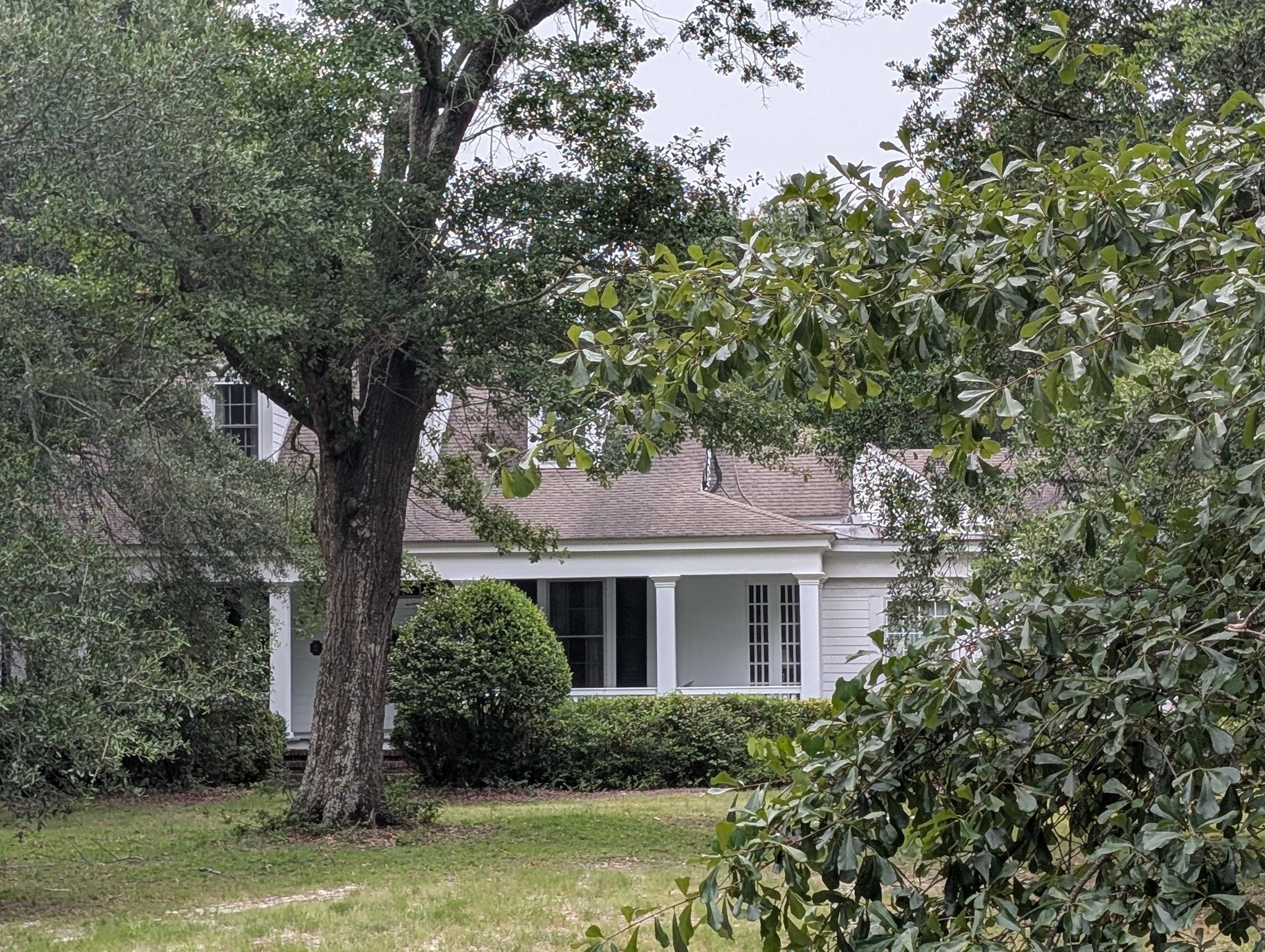
Chancellor James P. Carroll house ca 1855
Constructed around 1855, the Chancellor James P. Carroll House is one of Aiken’s most distinguished antebellum residences and an important landmark in South Carolina’s political and architectural history. Located at 112 Gregg Avenue, the house was built by James Parsons Carroll, a prominent attorney who later served as Chancellor of the South Carolina Court of Equity. Carroll acquired the property from noted industrialist William Gregg, founder of the Graniteville Manufacturing Company, and likely intended the residence as a summer retreat in the growing resort community of Aiken. The home was individually listed in the National Register of Historic Places on November 23, 1977, in recognition of its architectural significance and its association with one of South Carolina’s leading nineteenth-century public figures.
The house is a refined example of Georgian-inspired domestic architecture, characterized by its simple yet dignified proportions and restrained detailing. Originally constructed as a one-and-one-half-story clapboard dwelling, the residence features a broad one-story piazza supported by six square columns with plain balustrades, reflecting the adaptation of classical forms to South Carolina’s climate. The rear elevation retains an elegant double-leaf entrance framed by sidelights and a fanlight, while the original symmetry of the house remains evident despite later alterations. During the 1930s, architect Willis Irvin, one of Aiken’s most influential designers and a later owner of the property, thoughtfully expanded the residence by incorporating the detached kitchen into the main structure and adding a complementary wing, preserving the home’s historic character while accommodating modern living.
Beyond its architectural importance, the house is closely associated with the distinguished career of James P. Carroll. Elected to the South Carolina House of Representatives in 1838, he later served in the State Senate before being elected Chancellor of the Court of Equity in 1859, a position he held until the court was abolished under the state constitution of 1868. Carroll also served as a delegate to South Carolina’s Secession Convention in 1860 and signed the state’s Ordinance of Secession, linking the property to one of the most consequential periods in South Carolina’s political history.
Today, the Chancellor James P. Carroll House remains one of Aiken’s finest surviving antebellum residences. Although sensitively altered over time, the home retains the majority of its original fabric and continues to convey the elegance and craftsmanship of mid-nineteenth-century domestic architecture. Its association with Chancellor Carroll, its later stewardship by architect Willis Irvin, and its remarkable preservation make the property an enduring symbol of Aiken’s rich architectural heritage and its role in the political and cultural history of South Carolina.