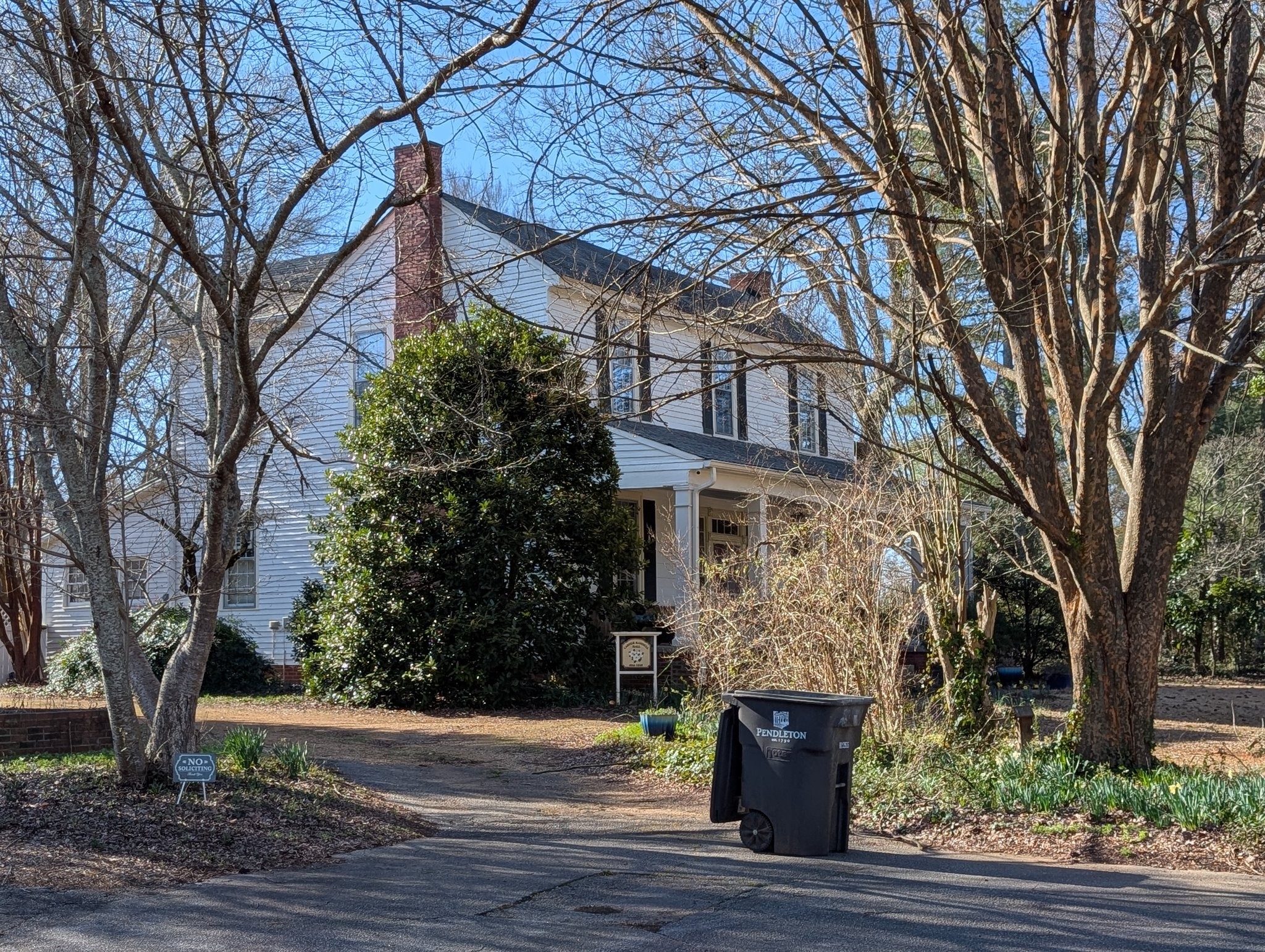
Carver–Randall House
The Carver–Randall House stands as a significant architectural and historical landmark in Pendleton, reflecting the town’s early development, craftsmanship, and enduring sense of place. Constructed in the nineteenth century during Pendleton’s formative years, the house embodies the character of a community shaped by agriculture, education, and civic life in the South Carolina Upstate.
Pendleton emerged in the early nineteenth century as a planned village and cultural center, distinguished by its orderly layout, classical influences, and commitment to education and religion. The Carver–Randall House was built within this context, serving as a private residence that reflected both the prosperity and refinement of its occupants. Its design and construction illustrate the architectural traditions of the era, combining functional living spaces with stylistic elements that conveyed permanence, stability, and social standing.
Over time, the house became associated with the Carver and Randall families, whose lives and activities were closely connected to the growth and civic development of Pendleton. Through their stewardship, the property remained an integral part of the community, witnessing generations of social change, economic shifts, and cultural continuity. Like many historic homes in Pendleton, the Carver–Randall House played a role in preserving the town’s distinctive identity as modernization transformed the surrounding region.
Architecturally, the house reflects the craftsmanship and materials characteristic of nineteenth-century construction, featuring proportions and details that speak to both aesthetic sensibility and practical design. Its enduring presence along Pendleton’s historic streetscape contributes to the visual harmony and historical depth for which the town is known.