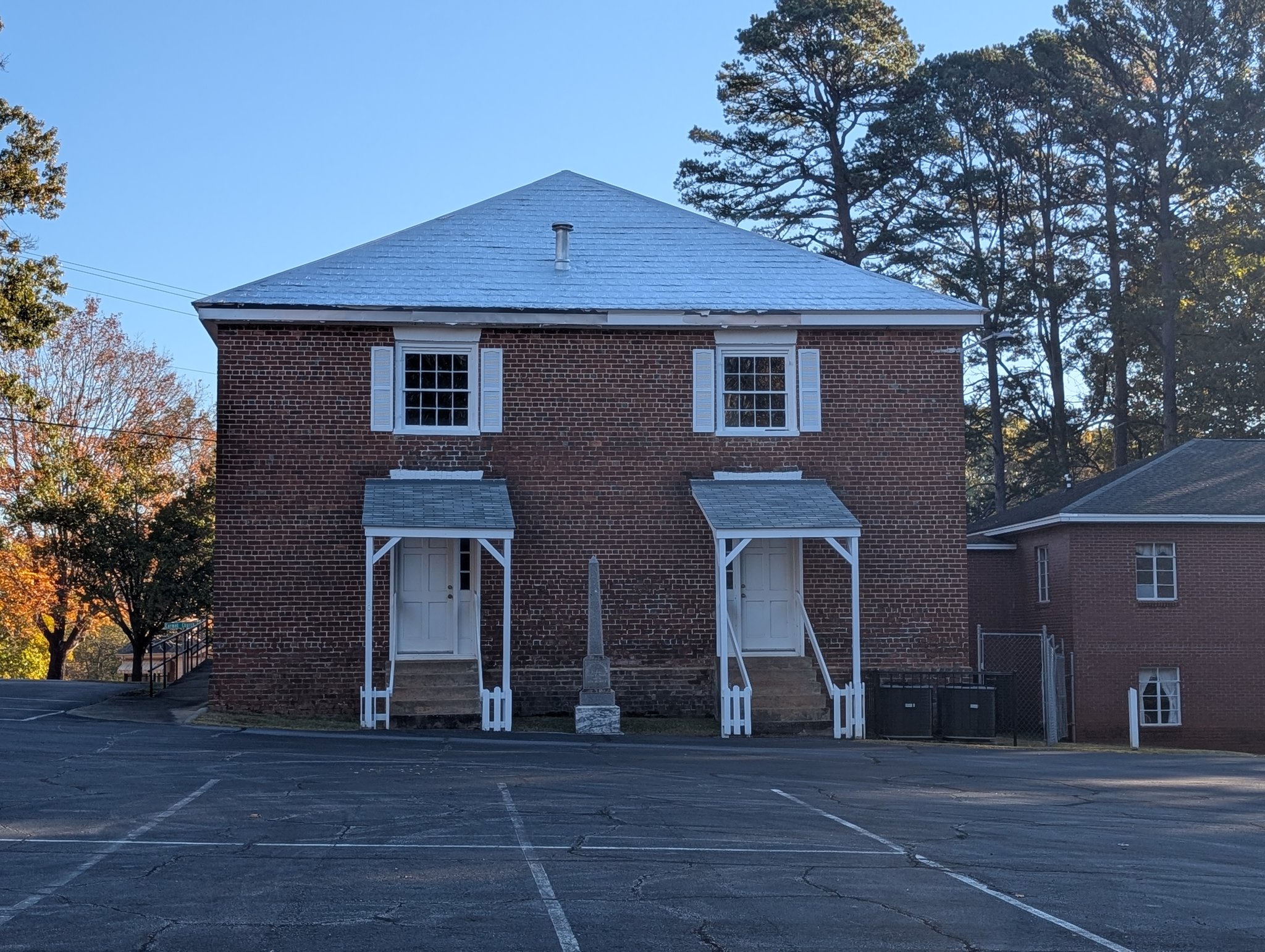
Carmel Presbyterian Church in Liberty
The story of Carmel Presbyterian Church begins in the latter decades of the 18th century, when the lands of what is now Pickens County were being settled in the wake of the Treaty of Hopewell (1785), which opened up upland South Carolina for European‑American settlement. According to historical accounts, the congregation was formally organized around 1787, making it one of the earliest Presbyterian congregations in the Upcountry region. In an era when forested hillsides separated farmsteads and roads were little more than cleared paths, the formation of a church was a bold mark of community gathering, mutual support, and spiritual anchoring.
Families of Scots‑Irish descent and other pioneer groups—drawn to the region’s promise of land and freedom—came together in worship under the Presbyterian tradition. Within the church’s cemetery today lie the graves of early settlers and patriots, giving physical form to its roots in the frontier era.
As the 19th century unfolded, Carmel Presbyterian Church became a stable institution in the region. Its location in the countryside near Liberty allowed it to serve a wide rural community, one in which church, school, family and farm were closely intertwined.
The church was also part of the broader pattern of religious life in the Upstate: frontier meeting houses advancing into more permanent structures, denominations solidifying, and communities forging local identity through shared worship.
Though modest, Carmel Presbyterian’s Church building and grounds reflect continuity and reverence for the past. The church stands amid a quiet cemetery whose gravestones narrate generations of local life—births, marriages, deaths, service in wars, family legacies. In local cultural‑resource surveys, the church is identified as one of the “historic and cultural features” of Liberty, tied to the region’s settlement era and continuing community presence. In addition, the church has maintained traditions such as annual homecoming services—events that bring together congregants and descendants from across the region to honor the church’s legacy.
Today, walking the grounds of Carmel, one sees not only a church building but a cross‑section of local history: gravestones of names long present in the region; the road that connects the site to town; the continuing tradition of church and community gathering. The place continues to speak of continuity—faith passed from one generation to the next—and of transformation—how a frontier congregation becomes part of modern life while honoring its heritage.
- Historical depth: With roots tracing back to the 1780s, Carmel is among the oldest congregations in the Upcountry, marking the early era of settlement and the establishment of organized religion in the foothills.
- Community anchor: The church has served successive generations, offering spiritual, educational and social support in a rural region that has seen major economic and demographic shifts.
- Cultural memory: The cemetery and the building together preserve local lineage—family names, military service, communal continuity.
- Living heritage: Because the church remains active (or at least celebrated via annual homecoming), it is not simply a relic but a locus of living connection between past, present and future.