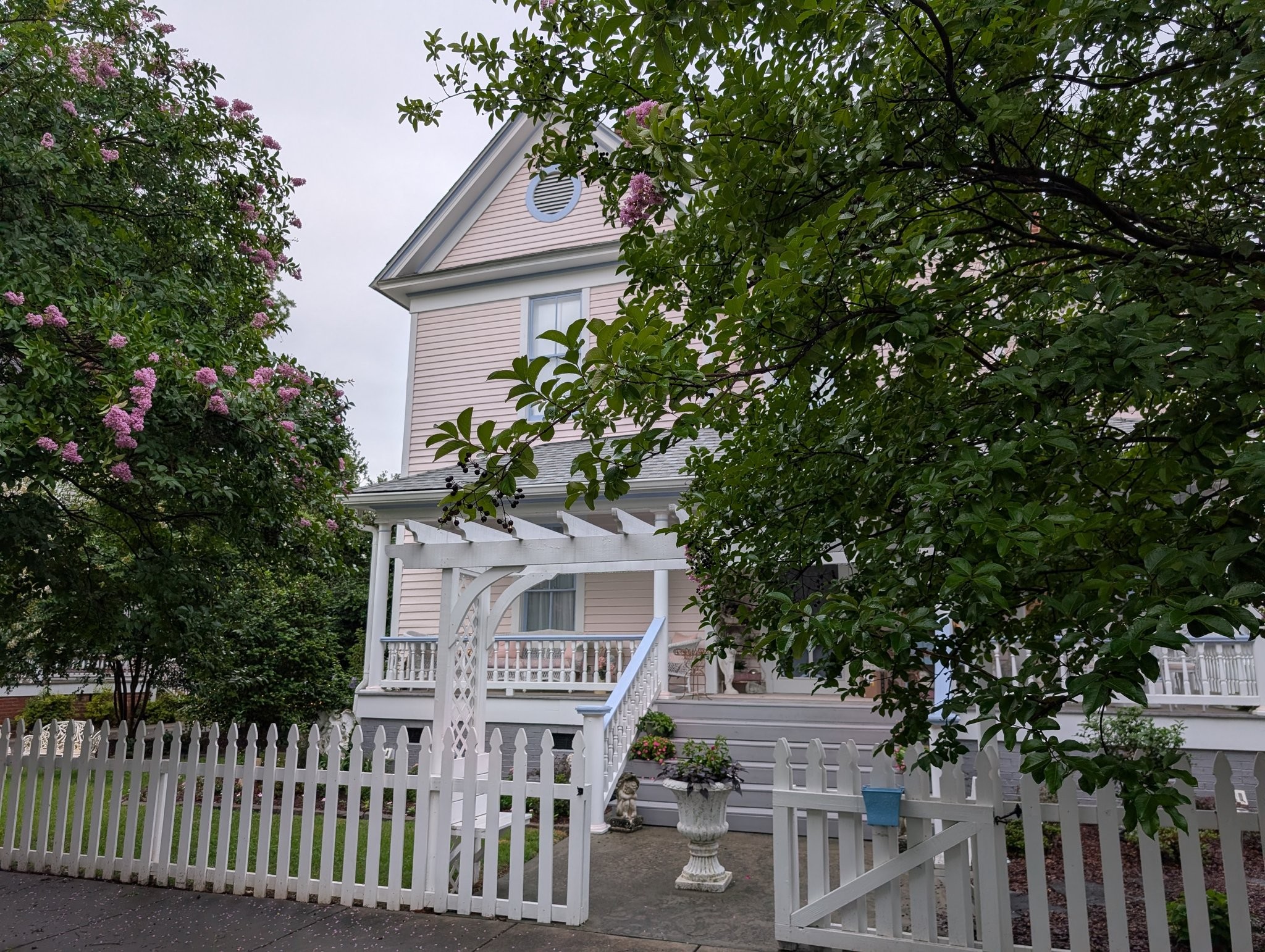
Constructed around 1902, the Bynum House is a noteworthy example of the residential growth that accompanied Rock Hill’s transformation from a railroad town into one of South Carolina’s leading commercial and manufacturing centers during the early twentieth century. Built for members of the Bynum family, the residence reflects the prosperity and confidence that characterized Rock Hill during a period of rapid expansion, when new neighborhoods emerged to accommodate the city’s growing professional and business classes. The home remains one of the finest historic residences associated with the development of the Reid Street area, a district that became known for its impressive collection of turn-of-the-century houses.
Architecturally, the Bynum House exemplifies the transition from the ornate Victorian styles of the late nineteenth century to the more restrained yet elegant designs favored during the early 1900s. The residence is distinguished by its simplified Queen Anne character enhanced with Classical Revival influences, a combination that was especially popular in prosperous Southern communities during this era. Features typically associated with the style include asymmetrical massing, varied rooflines, decorative porch elements, and classical detailing that conveyed both sophistication and permanence. The house’s design reflects the craftsmanship and attention to detail that marked Rock Hill’s most substantial residential construction at the turn of the century.
Situated within a neighborhood of prominent homes, the Bynum House illustrates the residential aspirations of Rock Hill’s emerging middle and upper-middle classes. Its construction coincided with a period when improved transportation, thriving textile industries, and expanding commerce fueled unprecedented local growth. Homes such as the Bynum House helped establish the architectural character of the city and contributed to the development of neighborhoods that remain significant components of Rock Hill’s historic fabric today.
Today, the Bynum House stands as an important reminder of Rock Hill’s early twentieth-century prosperity and residential development. Through its architectural character and association with one of the city’s established families, the property continues to contribute to the understanding of the community’s social, economic, and architectural history during one of its most transformative periods.