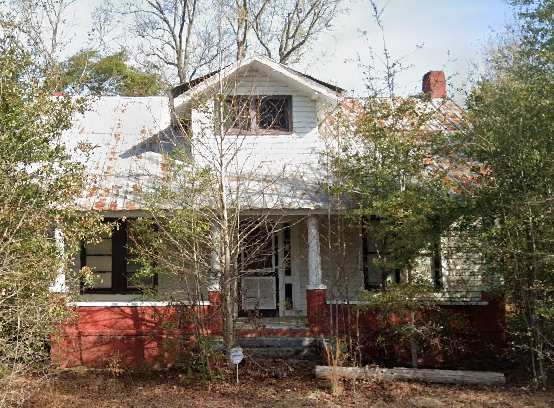
Boylston-Poole-Stillinger House ca 1912
Constructed circa 1912, the Boylston-Poole-Stillinger House is one of Salley’s most impressive early twentieth-century residences, embodying the prosperity and civic pride that characterized the community during its period of greatest growth. Built during an era when Salley served as an important agricultural and commercial center in eastern Aiken County, the house reflects the success of several prominent local families whose influence helped shape the town’s economic and social development. Its substantial scale, architectural sophistication, and prominent setting make it a significant landmark within the historic streetscape of Salley.
The residence displays many of the design characteristics popular during the early twentieth century, blending the formality of the Colonial Revival style with the spacious porches and practical features favored in the South. The house is distinguished by its balanced proportions, expansive roofline, and broad porch spaces that create a welcoming façade while emphasizing its stature within the community. Carefully crafted woodwork, decorative detailing, and quality construction materials reflect the high level of craftsmanship available during the period and demonstrate the aspirations of Salley’s leading citizens.
Associated with the Boylston, Poole, and Stillinger families, the house represents generations of local leadership and community involvement. These families were closely connected to the commercial, agricultural, and civic life of Salley, and the residence served as a symbol of their prominence and stability. As ownership passed through successive generations, the house remained an important part of the town’s residential landscape, witnessing the changes that transformed Salley from a bustling railroad community into the close-knit town it remains today.
Beyond its association with notable families, the Boylston-Poole-Stillinger House contributes significantly to the architectural heritage of Salley. Its well-preserved appearance and historic character provide a valuable link to the town’s early twentieth-century development and offer insight into the lifestyle and aspirations of the community’s most successful residents. More than a century after its construction, the house continues to stand as an enduring testament to Salley’s rich history, architectural tradition, and enduring sense of place.