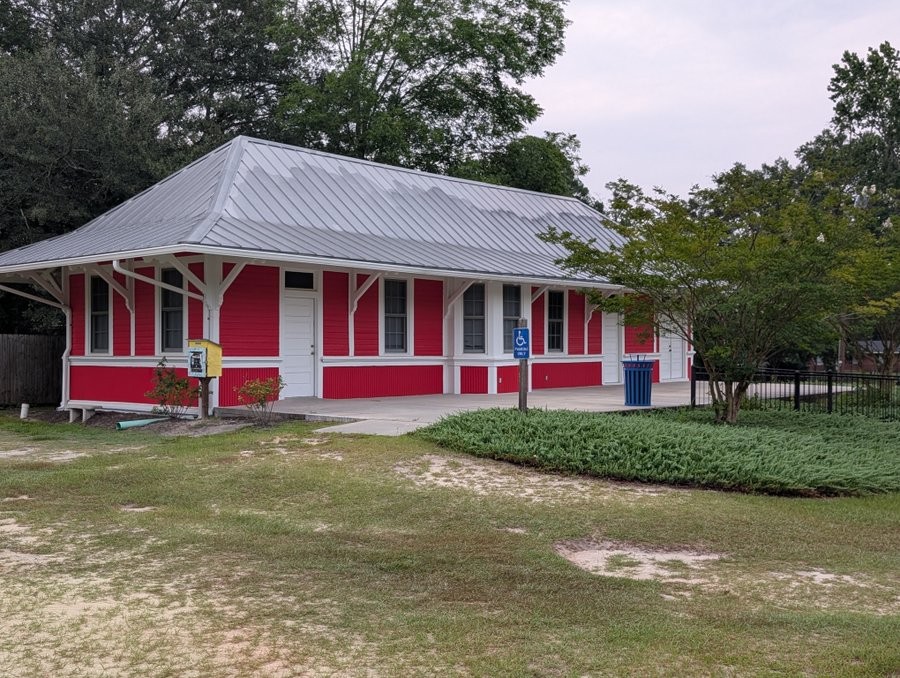
Batesburg Historic Train Depot ca 1900
Constructed circa 1900, the Batesburg Historic Train Depot stands as one of the community’s most significant reminders of the railroad era that transformed the rural agricultural settlements of western Lexington County into a thriving commercial center. Located along the Southern Railway line, the depot served as the principal transportation hub for passengers, freight, mail, and agricultural products during a period when rail travel was the lifeblood of South Carolina’s small towns. Cotton, peaches, timber, livestock, and manufactured goods passed through the station daily, while residents relied upon the depot as their gateway to Columbia, Augusta, and markets throughout the Southeast. The depot played a pivotal role in the economic development of Batesburg and helped establish the town as an important regional shipping and commercial center during the late nineteenth and early twentieth centuries.
Architecturally, the depot reflects the functional yet attractive design characteristic of Southern Railway stations of the period. The one-story frame structure features broad overhanging eaves supported by decorative brackets that provided shelter for passengers and freight operations. A low-pitched gabled roof, large multi-light windows, and wide door openings accommodated both travelers and the efficient handling of goods. The extended platform and covered loading areas illustrate the building’s dual purpose as both a passenger station and freight depot, while its restrained detailing conveys the practical craftsmanship associated with railroad architecture at the turn of the twentieth century.
Beyond its architectural significance, the depot served as the social and economic heart of Batesburg for generations. It was the place where soldiers departed for military service, families welcomed returning loved ones, merchants received goods from across the nation, and visitors first encountered the growing town. The rhythm of daily life was often dictated by the arrival and departure of trains, making the depot an enduring symbol of progress, commerce, and community life throughout much of the twentieth century.
Today, the Batesburg Historic Train Depot remains an important landmark that preserves the legacy of the railroad’s influence on Batesburg-Leesville’s growth and prosperity. Its continued preservation provides a tangible connection to the community’s transportation heritage and serves as a reminder of the vital role railroads played in shaping the economic, architectural, and cultural landscape of the South Carolina Midlands.