Baker’s Store
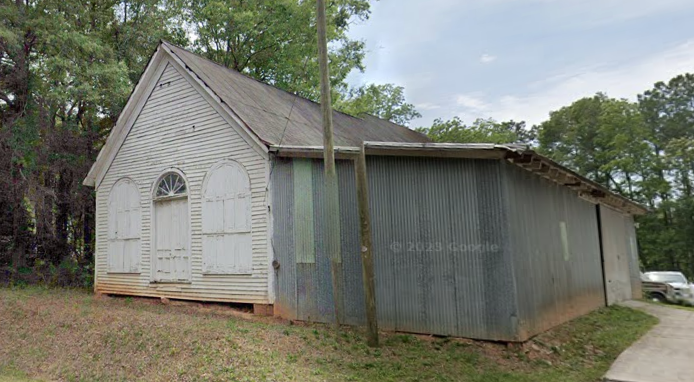
Nestled in the heart of the Mount Carmel Historic District, Baker’s Store (often referred as building #9 in the district) stands as one of the most visually striking and architecturally unique commercial structures framed by the town’s late‑19th/early‑20th‑century boom. Constructed around 1890, this one-story weatherboarded building features a gable roof and a confidently temple‑like form, distinguished by its ornate facade: a central double door with an elegant arched fanlight, flanked by large round‑arched windows fitted with paneled shutters.
The design gives Baker’s Store both dignity and presence amidst the modest vernacular buildings that surround it. It was part of a bustling trading core, serving local farmers, railroad travelers, and townsfolk in an era when Mount Carmel thrived as a vibrant commercial center thanks to the Savannah Valley Railroad and the establishment of shops, cotton gins, churches, and professional services.
Though physically modest in scale, Baker’s Store exemplifies how architecture—even in small rural settlements like Mount Carmel—could blend practicality with stylistic flourish. The arched doors and windows provide a refined contrast to the otherwise simple wood-frame construction, signaling both civic pride and commercial confidence during the town’s period of prosperity.
Over time, many businesses shuttered and the community dwindled. Yet Baker’s Store remains as one of just a handful of structures that still echo Mount Carmel’s turn-of-the-century vitality, preserving the character of a once-thriving railroad town.
In essence, Baker’s Store isn’t merely a relic—it’s a quietly eloquent piece of civic architecture that reflects Mount Carmel’s economic and social ambitions at the close of the 19th century, and continues to anchor the historic district’s visual narrative today.