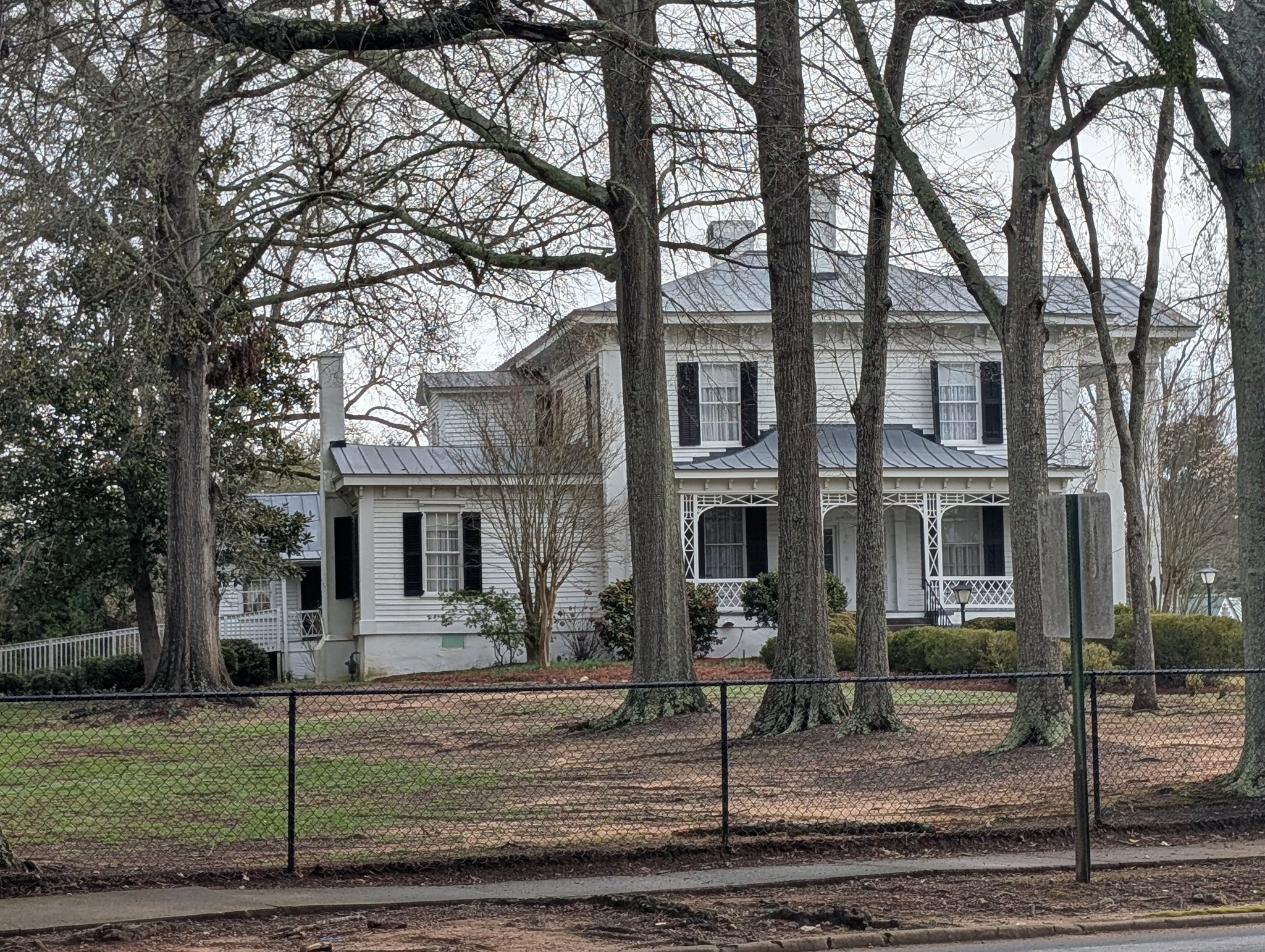
Armistead Burt House in Abbeville
The historic Armistead Burt House stands as one of the most significant surviving antebellum homes in Abbeville, reflecting both the prosperity and the political influence of one of the region’s most prominent nineteenth-century families. Constructed in the early 1830s, the residence was built for Armistead Burt, a respected lawyer, planter, and statesman who served in the United States House of Representatives from 1843 to 1853 representing South Carolina’s Third Congressional District.
The home was designed in a refined Greek Revival style, a popular architectural form in the South during the antebellum period that symbolized stability, classical ideals, and civic pride. Its balanced proportions, broad porch, and stately columns reflected the wealth and social standing of the Burt family and mirrored the architectural character that defined many of Abbeville’s most distinguished residences during the mid-nineteenth century.
Armistead Burt himself was deeply involved in both local and national affairs. As a member of Congress during a period of intense sectional debate, he witnessed the growing tensions between North and South that would eventually culminate in the American Civil War. The Burt family remained closely tied to Abbeville’s political life, and the house served as a gathering place for civic discussion and social activity during an era when the town played an influential role in South Carolina’s political climate.
Following Burt’s death in 1858, the residence remained associated with his family, including his daughter, Mary Boykin Chesnut, who married James Chesnut Jr.. Mary Boykin Chesnut later became widely known for her Civil War diary, one of the most important personal accounts of life among the Confederate elite during the war.