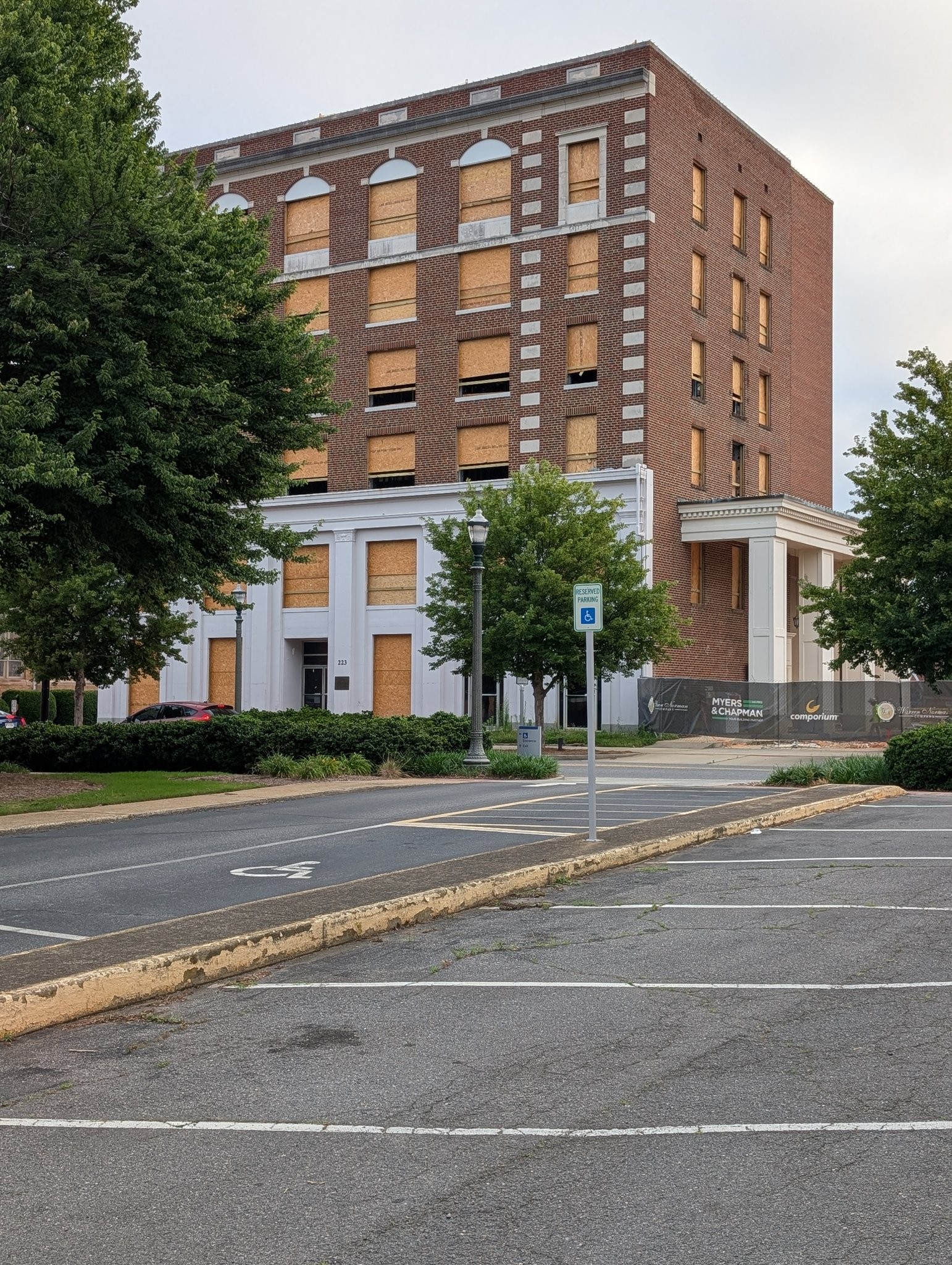
The Andrew Jackson Hotel, constructed between 1926 and 1927 in the heart of downtown Rock Hill, emerged as one of the city’s most ambitious civic and architectural achievements of the early twentieth century. Rising six stories above East Main Street, the hotel was financed through a major community fundraising campaign in which local citizens contributed more than $250,000 to establish a first-class hotel capable of supporting Rock Hill’s growing commercial and industrial prominence. The project reflected the city’s rapid development during the textile boom era and demonstrated the determination of local business leaders to position Rock Hill as a modern regional center.
Designed by prominent South Carolina architect Charles Coker Wilson, the Andrew Jackson Hotel is regarded as one of Rock Hill’s finest examples of Beaux Arts architecture. The imposing brick structure featured limestone arches, decorative pilasters, a richly ornamented cornice, and an elegant lobby intended to rival those of larger Southern cities. Historic surveys describe the building as one of the city’s “greatest triumphs,” reflecting Wilson’s formal training at the École des Beaux-Arts in Paris and his reputation as one of South Carolina’s leading early twentieth-century architects.
For decades, the Andrew Jackson Hotel served as the social and cultural center of downtown Rock Hill. Its ballroom, dining rooms, and meeting spaces hosted civic gatherings, weddings, political events, and visiting dignitaries, while the building also housed the Rock Hill Chamber of Commerce. During the late 1930s, the hotel gained additional historical significance when RCA Victor conducted recording sessions there featuring early country and gospel performers such as the Monroe Brothers, the Delmore Brothers, and South Carolina musician Arthur Smith. These sessions connected the hotel to the formative years of Southern recorded music.
Following the decline of passenger rail travel and changing commercial patterns, the hotel ceased operations in 1970 and was later adapted for office use as the Guardian Building. Preservation efforts helped retain much of the structure’s historic character, ensuring its continued prominence within downtown Rock Hill. Today, the former Andrew Jackson Hotel remains one of the city’s most recognizable landmarks and stands as a lasting symbol of Rock Hill’s civic ambition, architectural sophistication, and commitment to historic preservation. Recent restoration initiatives aimed at returning the building to hospitality use further underscore its enduring importance to the cultural and architectural heritage of York County.