Founded in 1916 by philanthropist and Winter Colony leader Louise “Lulie” Hitchcock, Aiken Preparatory School became one of the most distinctive educational institutions associated with Aiken’s renowned Winter Colony. Established as a boarding school for the sons of affluent winter residents, the school provided a rigorous classical education designed to prepare boys for admission to prestigious preparatory schools in the Northeast. Its emphasis on scholarship, civility, horsemanship, athletics, and character reflected the traditions and lifestyle of Aiken’s equestrian community, making the school an integral part of the city’s unique social and cultural identity.
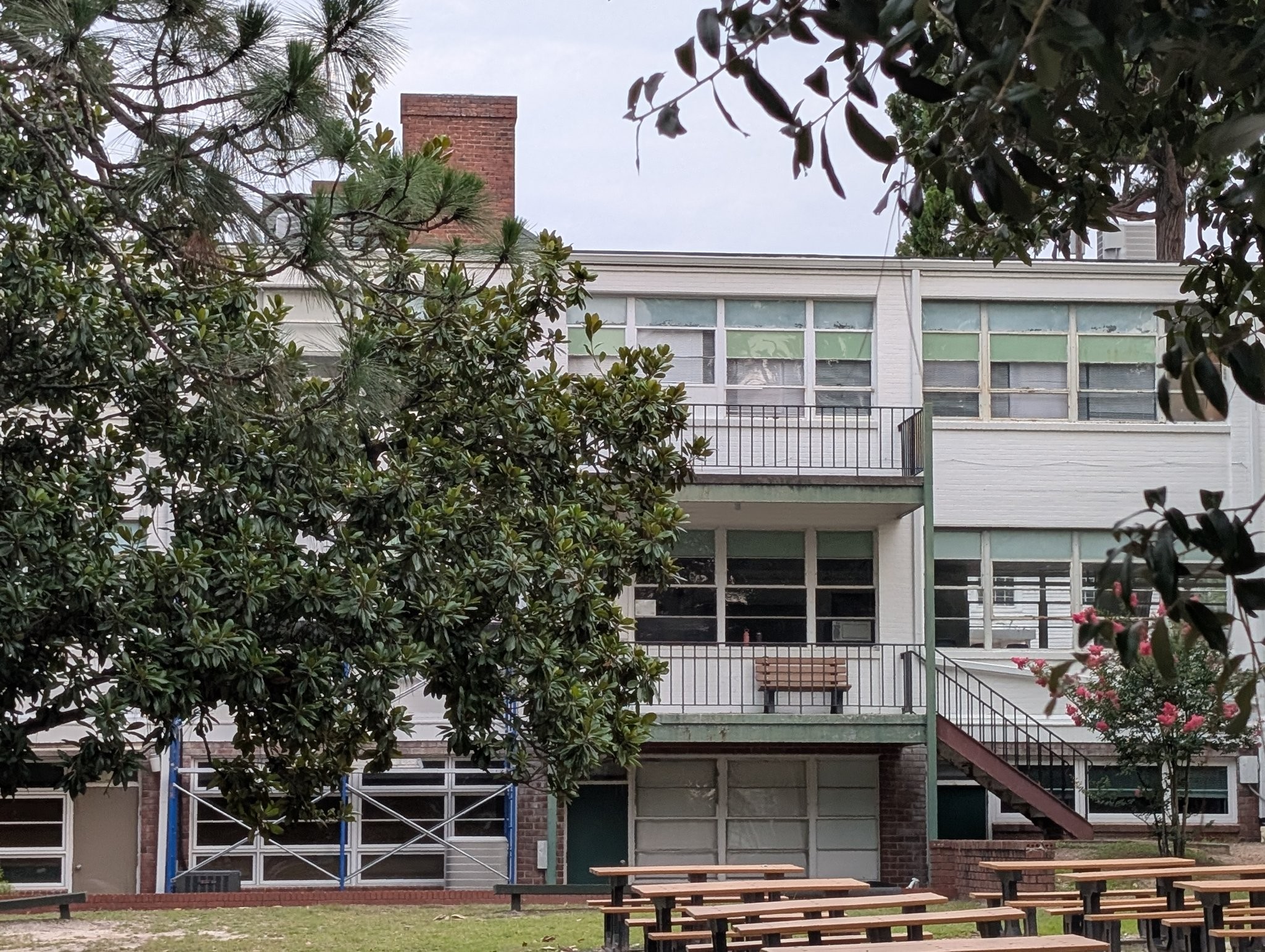
The campus occupied the former George F. Edmunds residence on Barnwell Avenue, a substantial early twentieth-century Colonial Revival estate that was expanded over time as enrollment increased. Additional buildings—including a gymnasium, laundry, bathhouse, faculty housing, and athletic facilities—were added as the institution grew, creating a cohesive educational campus within the Winter Colony neighborhood. Surrounded by mature landscaping and broad tree-lined avenues, the school blended seamlessly with the neighboring cottages and estates while maintaining its own distinguished architectural presence.
Architecturally, the main building reflects the restrained elegance characteristic of Colonial Revival design, with balanced massing, classical detailing, and residential proportions that conveyed both refinement and permanence. The surrounding campus buildings complemented the main structure, reinforcing the image of an elite preparatory academy rather than a traditional institutional school. Together they formed one of the most recognizable educational campuses in historic Aiken.
Aiken Preparatory School remained a respected institution for nearly a century, educating generations of students while helping define the educational traditions of the Winter Colony. The school eventually expanded beyond its original mission before merging with Aiken Day School and later becoming part of Mead Hall Episcopal School, ensuring the continuation of its educational legacy. Today, the former campus remains a contributing resource within the Aiken Winter Colony Historic District III, where it stands as a significant reminder of the city’s unique blend of education, architecture, and equestrian culture during the early twentieth century.