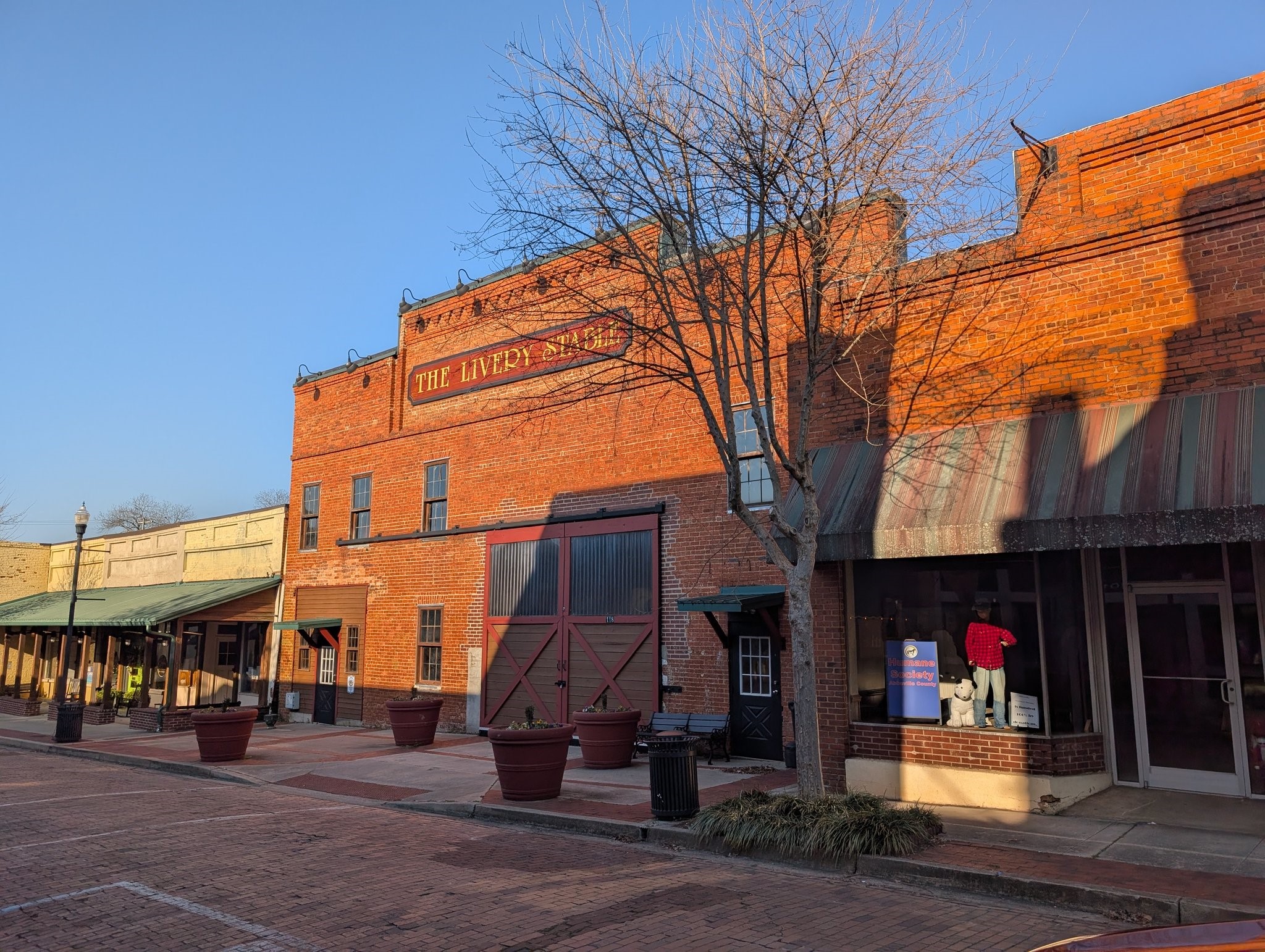
Abbeville Livery Stable in Abbeville
The Abbeville Livery Stable at 118 Trinity St in Abbeville, South Carolina, stands as a lasting reminder of a time when horsepower quite literally powered the town’s economy. Constructed in the late nineteenth century, likely during the 1880s or 1890s, the building emerged during a period of recovery and renewed growth in Abbeville following the Civil War and Reconstruction. As the county seat and commercial heart of Abbeville County, the town relied heavily on agriculture and regional trade—activities that depended on dependable transportation.
Before automobiles transformed American life, livery stables were essential infrastructure. The Abbeville Livery Stable provided boarding, feeding, and care for horses, along with the rental of buggies, wagons, and teams fortravel. Farmers arriving from the surrounding countryside would stable their horses while conducting business near the courthouse square. Traveling salesmen, attorneys, and visitors depended on the stable’s services as they moved through town. In this way, the stable functioned as both a commercial enterprise and a social crossroads.
Architecturally, the building reflects its utilitarian purpose. Constructed of durable brick with large carriage door openings, it was designed for constant use and heavy traffic. Thick masonry walls, high ceilings, and ventilation openings helped manage heat and airflow in South Carolina’s climate. Inside, heavy timber framing supported loft spaces where hay and feed were stored. Every feature of the structure served a practical need, yet together they contribute to the historic character of downtown Abbeville.
The early twentieth century brought profound change. As automobiles became more common and road systems improved, the need for horse-based services steadily declined. Like many livery stables across the South, the Abbeville Livery Stable eventually ceased its original function. Unlike many others, however, it survived. Its continued presence into the modern era reflects both the sturdy craftsmanship of its construction and the community’s appreciation for its historic fabric.
Today, the Abbeville Livery Stable remains an important link to the town’s pre-automobile past. It represents a period when agriculture, commerce, and daily life revolved around the rhythm of hoofbeats and wagon wheels. As one of the few remaining structures of its kind in the region, it contributes significantly to Abbeville’s architectural heritage and offers insight into the transportation systems that once shaped the development of small-town South Carolina.