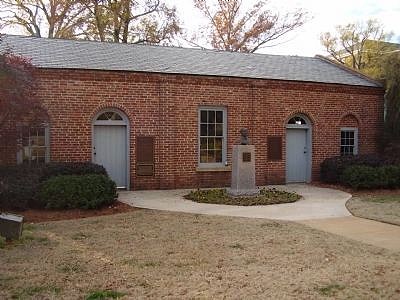
Winthrop University Chapel ca 1823
Winthrop University Chapel, commonly known as the Little Chapel, was originally constructed in 1823 in Columbia, South Carolina, as a stable and carriage house for the Ainsley Hall mansion. Designed by prominent South Carolina architect Robert Mills, best known for his design of the Washington Monument, the small brick structure reflects the restrained Federal architectural style popular during the early nineteenth century. Its simple rectangular form, brick masonry construction, symmetrical arrangement, and understated detailing reflect its original utilitarian purpose. The building later became associated with the Presbyterian Church and served as a chapel for Columbia Theological Seminary. In 1886, the structure assumed a significant role in South Carolina’s educational history when it became the first classroom of the Winthrop Training School for Teachers, founded by David Bancroft Johnson to prepare women for careers in education.
In 1936, the chapel was donated to Winthrop and carefully dismantled, with approximately 36,000 numbered bricks and its original structural timbers transported to the university’s permanent campus in Rock Hill. Reconstruction was completed in 1937, preserving the building’s historic materials and architectural character while establishing a lasting connection to Winthrop’s earliest years. The Little Chapel has since served as a place of worship, reflection, and remembrance, becoming one of the most historically significant structures on the campus. It is also the final resting place of Winthrop’s founding president, David Bancroft Johnson, and his wife, Mai Rutledge Smith Johnson. Today, the chapel stands as a tangible reminder of the university’s origins and its longstanding commitment to education, faith, and public service.