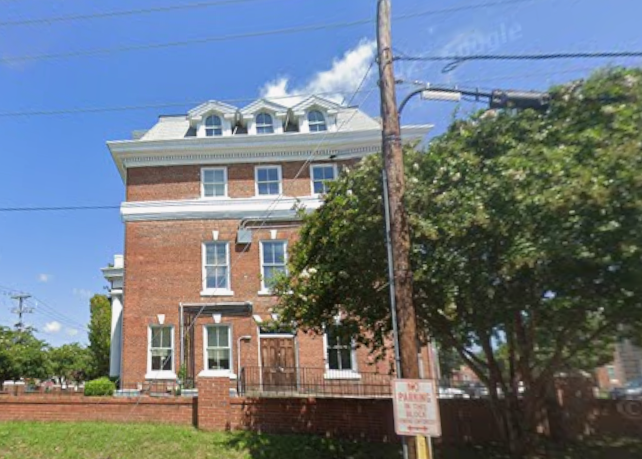
Coppin Hall ca 1906-1907
Coppin Hall is one of the most architecturally distinguished buildings associated with Allen University and forms an important part of the historic campus in Columbia’s Waverly neighborhood. Constructed in 1906–1907, the imposing four-story building was erected during a period of major growth for Allen University and provided badly needed space for instruction, worship, administration, recreation, and student housing. The cornerstone was laid in 1906, and the building was completed on March 1, 1907, at a reported cost of approximately $22,000. The building was named for Levi Jenkins Coppin, an African Methodist Episcopal bishop and prominent church leader.
Coppin Hall was designed by Charles Coker Wilson, one of South Carolina’s most important early twentieth-century architects, in collaboration with Henry Ten Eyck Wendell. Wilson, a Columbia architect who had studied civil engineering at South Carolina College and later pursued architectural study at the École des Beaux-Arts in Paris, was responsible for a wide range of important buildings throughout the state. His collaboration with Wendell from 1905 to 1907 produced several notable institutional buildings, including Coppin Hall.
The building is an impressive expression of Classical Revival architecture, its substantial red-brick walls giving it a dignified institutional character. Historic descriptions record the structure as approximately 110 feet long by 45 feet wide and four stories in height, capped by a distinctive mansard roof covered with decorative metal shingles. The principal elevation is especially notable for its broad, flat-roofed portico supported by four stately Grecian columns, giving the building a formal classical presence appropriate to its role as a major educational and religious structure.
The original arrangement of the interior reflected the multiple responsibilities Coppin Hall fulfilled within the growing university. The first floor contained an office, library, recitation rooms and recreational space. The second floor was devoted almost entirely to a large chapel capable of accommodating approximately 700 people, making Coppin Hall an important religious and community gathering place as well as an academic building. The third and fourth floors were arranged as dormitory quarters for female students, providing residential facilities at a time when Allen University was expanding its educational opportunities for African American women.
The construction of Coppin Hall was closely connected with the larger mission of Allen University. Founded by the African Methodist Episcopal Church, Allen developed from Payne Institute, established in 1870, and was relocated to Columbia in the early 1880s. The institution provided educational opportunities that were largely denied to African Americans elsewhere in the segregated South. Its curriculum historically included theological, collegiate, normal and legal education, making Allen an important center for the preparation of ministers, teachers, lawyers and other African American professionals.
Coppin Hall therefore represented more than an additional campus building. Its chapel, classrooms and women’s residential facilities brought together several essential aspects of university life under one roof. The inclusion of substantial dormitory accommodations for women is particularly significant, reflecting the expanding educational aspirations of African American women during the Progressive Era and Allen University’s role in providing opportunities for their higher education and professional development.
Architecturally, Coppin Hall also represents the transition of Allen University from its nineteenth-century origins into a more substantial twentieth-century institution. The earlier Arnett Hall, begun in the 1890s, established the historic campus’s late nineteenth-century architectural character. Coppin Hall followed only a decade later with a more monumental Classical Revival design, signaling the university’s growing ambitions and its desire to provide facilities comparable in scale and architectural dignity to those found at other established colleges. Together the buildings document the physical growth of an African American institution during an era of profound racial inequality.
Coppin Hall remains one of the principal contributing buildings within the Allen University Historic District, which was listed in the National Register of Historic Places in 1975. The district includes Arnett Hall, Coppin Hall, the Canteen, the Chappelle Administration Building and the Joseph Simon Flipper Library, forming an important collection of historic resources associated with African American education, the African Methodist Episcopal Church and the history of Columbia’s Black community.
The building has undergone preservation work, and Historic Columbia recognized the restoration of Coppin Hall with a Preservation/Restoration Award in 2003. More recently, Coppin Hall has been the subject of continued preservation planning, including federal historic-preservation funding intended to rehabilitate the building for renewed university use.