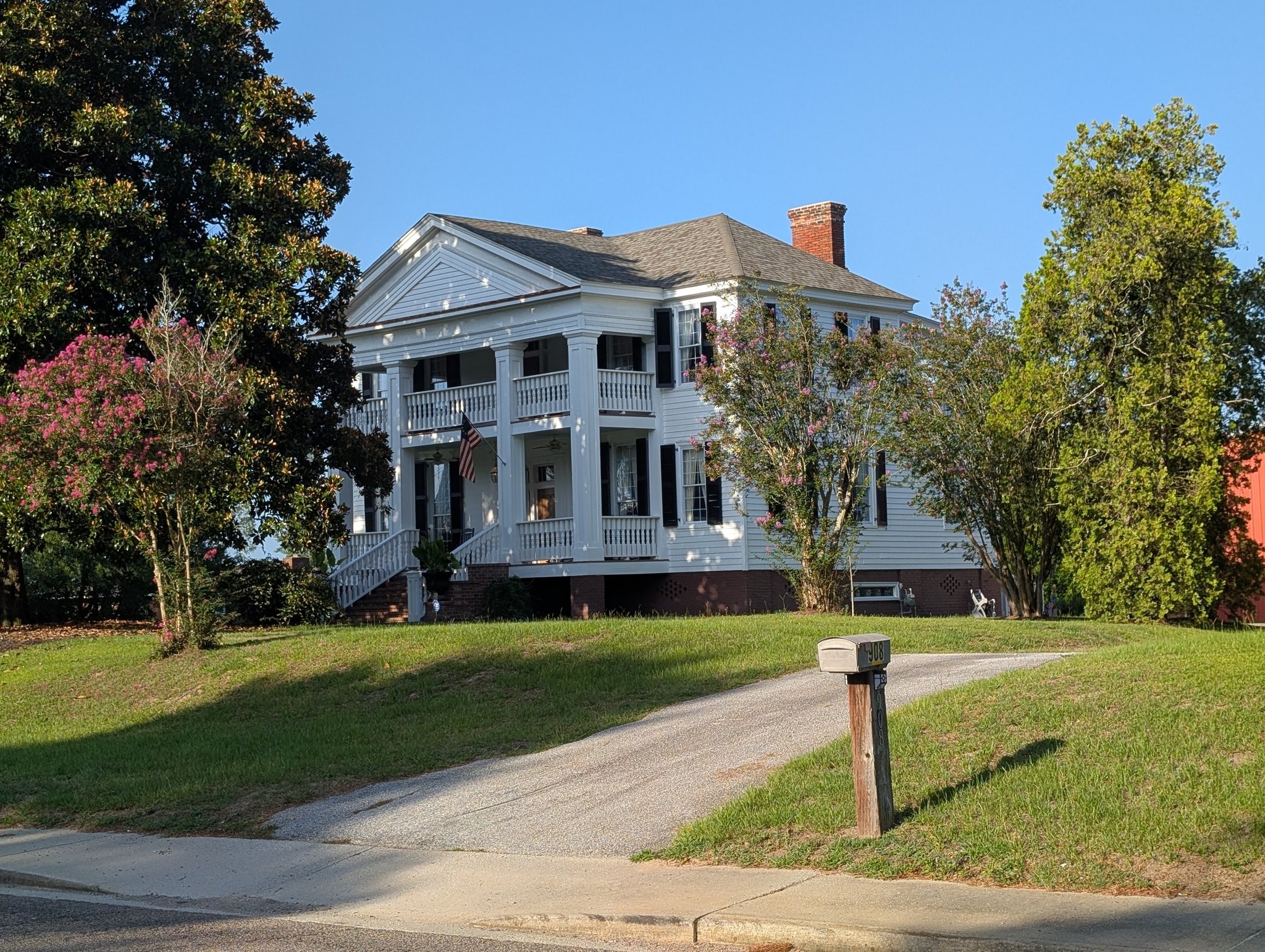
Charles Hammond house ca 1775-1780
Constructed between 1775 and 1780, the Charles Hammond House is one of the oldest surviving residences in Aiken County and an exceptional example of eighteenth-century frontier architecture in western South Carolina. Built during the closing years of the Colonial period and the opening years of the American Revolution, the house reflects the earliest phase of permanent settlement along the Savannah River. It is associated with Charles Hammond, an early settler whose family played an important role in the agricultural and social development of the region before the formation of Aiken County in 1871. As one of the few remaining dwellings from this formative era, the house provides a tangible connection to the lives of the area’s earliest European-American inhabitants.
The residence exemplifies the practical craftsmanship and straightforward design of late eighteenth-century domestic architecture. Originally constructed using heavy timber framing with locally sawn materials, the house features a simple rectangular plan, steep gabled roof, weatherboard siding, substantial brick or stone chimney, and modest exterior detailing. The interior was designed around functional living spaces, with large fireplaces serving as the focal point of daily family life. Hand-hewn beams, wide pine flooring, pegged joinery, and original woodwork illustrate the skill of frontier craftsmen who relied upon traditional building methods passed down through generations. Despite later alterations and improvements, the house continues to retain much of its historic character and early architectural fabric.
Throughout its long history, the Charles Hammond House has witnessed many of the defining events that shaped South Carolina and the nation. Standing during the Revolutionary War, the establishment of the new republic, the expansion of plantation agriculture, the Civil War, Reconstruction, and the twentieth century, the residence has remained a silent witness to more than two centuries of regional history. Successive generations of the Hammond family and later occupants adapted the property to changing agricultural practices while preserving its essential historic form, allowing the house to remain an enduring symbol of the area’s early settlement.
Today, the Charles Hammond House stands as an invaluable architectural and historical resource that illustrates the transition from colonial frontier settlement to a thriving agricultural community. Its remarkable age, association with one of the region’s pioneer families, and preservation of eighteenth-century construction techniques make it one of Aiken County’s most significant historic residences. As a rare survivor from the Revolutionary era, the house continues to embody the resilience, craftsmanship, and pioneering spirit that characterized South Carolina’s earliest settlers.