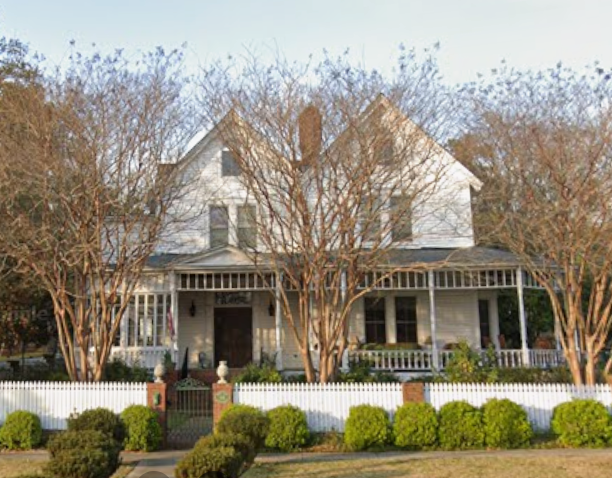
Constructed around 1880, Green Gate is a historic residence that reflects the early development of Aiken as a fashionable winter resort community following the arrival of the railroad and the establishment of the city’s renowned Winter Colony. Built during the late nineteenth century, the house represents the transition period when Aiken evolved from a small railroad town into a nationally recognized destination for wealthy seasonal visitors seeking a mild climate, healthy environment, and leisurely Southern lifestyle.
Green Gate embodies the architectural traditions popular during the late Victorian era, when residential design emphasized picturesque forms, comfortable living spaces, and a close relationship between the home and its surrounding landscape. The residence displays characteristics associated with the period, including a welcoming scale, carefully balanced proportions, and decorative elements that reflect the craftsmanship of the late nineteenth century. Like many of Aiken’s historic cottages, the home was designed to provide both elegance and informality, accommodating seasonal living while taking advantage of the region’s pleasant weather and natural beauty.
The property developed during a significant period in Aiken’s history when affluent visitors from the Northeast began establishing winter homes throughout the community. These residents transformed the city’s architectural landscape with cottages, estates, and landscaped grounds that created the distinctive character of the Winter Colony. Homes such as Green Gate contributed to this evolving neighborhood pattern, representing the more intimate residential scale that existed alongside Aiken’s larger winter estates.
The setting of Green Gate reflects the broader traditions of Aiken’s historic neighborhoods, where mature landscaping, tree-lined streets, and gracious residential properties created a park-like atmosphere. The house’s design and location illustrate the preference of late nineteenth-century residents for homes that blended comfort, charm, and connection to the outdoors.
Today, Green Gate remains an important part of Aiken’s historic residential heritage. As a surviving example of a late Victorian-era dwelling, it provides insight into the architectural evolution of the city before the height of the Winter Colony period and serves as a reminder of the people, traditions, and changing lifestyles that shaped Aiken during the late nineteenth and early twentieth centuries. Its continued presence contributes to the preservation of the community’s distinctive architectural character and historic identity.