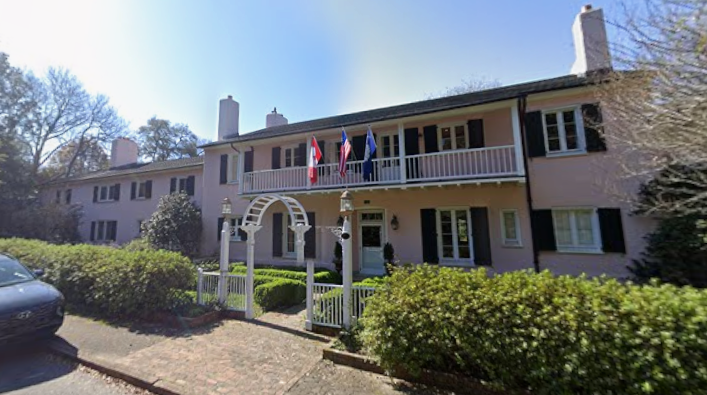
The Black Stables ca 1930
The Black Stables, constructed circa 1930 at 217 Easy Street, is one of the most distinctive equestrian buildings associated with Aiken’s celebrated Winter Colony. Designed by noted architect Julian Peabody, the stable was erected on land originally owned by Celestine Eustis that later became part of the estate of financier and prominent Winter Colonist William C. Whitney. The property was built for Bayard and Elizabeth (Sears) Warren, members of Aiken’s seasonal sporting community, and reflects the central role that horses and equestrian pursuits played in the city’s identity as the “Sporting Capital of the South.” The building is also known locally as the Pink House, despite its historic name.
Architecturally, The Black Stables exemplifies the high level of design invested in Aiken’s equestrian facilities during the height of the Winter Colony era. Rather than serving as a purely utilitarian structure, the building was carefully composed to complement the surrounding estates, displaying refined proportions, quality craftsmanship, and architectural detailing characteristic of Julian Peabody’s work. Its design reflects the Colonial Revival influences commonly found throughout the Winter Colony while accommodating the specialized needs of boarding and caring for valuable riding and polo horses. The stable stands as a reminder that equestrian buildings were considered essential and often architecturally significant components of Aiken’s winter estates.
The Black Stables is historically significant for its association with the development of Aiken’s internationally renowned Winter Colony, whose wealthy seasonal residents transformed the city into one of America’s foremost equestrian resorts during the late nineteenth and early twentieth centuries. The property illustrates the importance of polo, fox hunting, racing, and horseback riding to the social and recreational life of Aiken’s winter visitors and contributes to the architectural and historical character of the Aiken Winter Colony Historic District II, which was listed in the National Register of Historic Places in 1984. Today, The Black Stables remains an important surviving example of the specialized equestrian architecture that helped define Aiken’s unique cultural landscape and enduring sporting heritage.