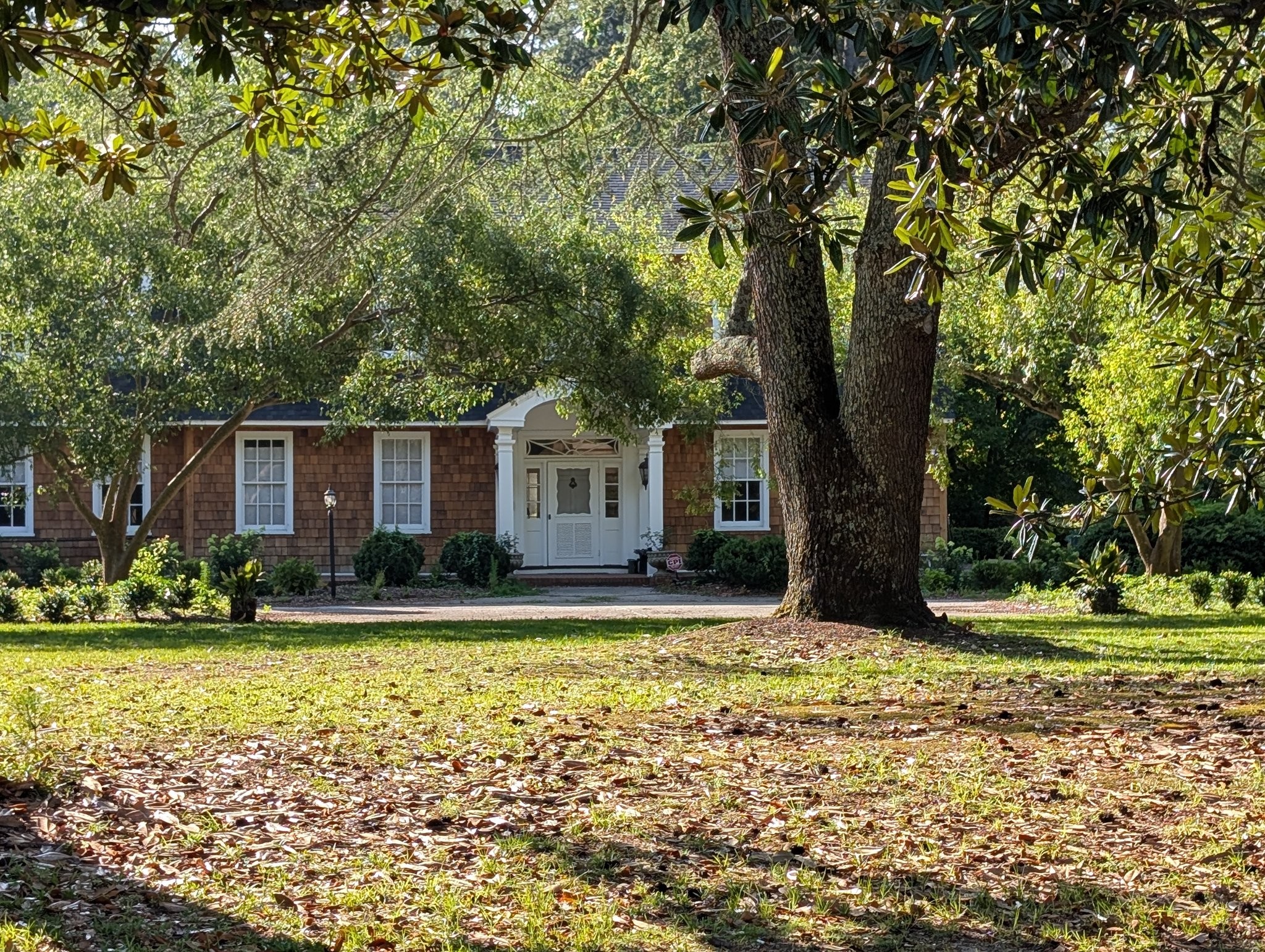
Green Plains ca 1930
Constructed in 1927 and completed during the height of Aiken’s celebrated Winter Colony era, Green Plains stands as an elegant example of the picturesque residential architecture that characterized the city’s equestrian and resort community during the early twentieth century. Located at the southeast corner of Whiskey Road and set amid mature landscaping and estate grounds, the residence was designed and built by Mrs. Margaret E. Chafee as a rental property intended specifically for Aiken’s seasonal winter residents, reflecting the growing demand for sophisticated accommodations among the city’s affluent sporting visitors.
Architecturally, Green Plains embodies the charm and informality of the Colonial Revival and Shingle Style traditions that were popular among Winter Colony cottages of the period. The one-and-one-half-story frame residence is distinguished by its shake-shingle exterior, irregular massing, and prominent gambrel roof punctuated by dormers and brick chimneys that create a picturesque silhouette among the pines. Decorative details including six-over-six sash windows with louvered shutters, a finely crafted entrance with sidelights and transom, and a brick terrace that wraps portions of the house lend the property a quiet elegance while reinforcing its resort character. A companion servant’s cottage connected by a high brick wall and arched gateway further contributes to the estate-like composition of the property.
Green Plains quickly became associated with some of the most prominent figures of Aiken’s Winter Colony. Early occupants included members of the influential Widener family, while later tenants included diplomat and future United States Ambassador to Great Britain, David K. E. Bruce, and his wife, Ailsa Mellon Bruce, daughter of financier and philanthropist Andrew Mellon. Their residency reflects the caliber of individuals drawn to Aiken’s unique combination of mild climate, equestrian opportunities, and refined social life during the interwar years.
Today, Green Plains remains an important contributor to Aiken’s historic Winter Colony landscape and serves as a tangible reminder of the period when the city was among America’s premier winter sporting destinations. Its remarkable architectural integrity and close association with notable residents continue to illustrate the elegance and sophistication that defined Aiken’s resort era.