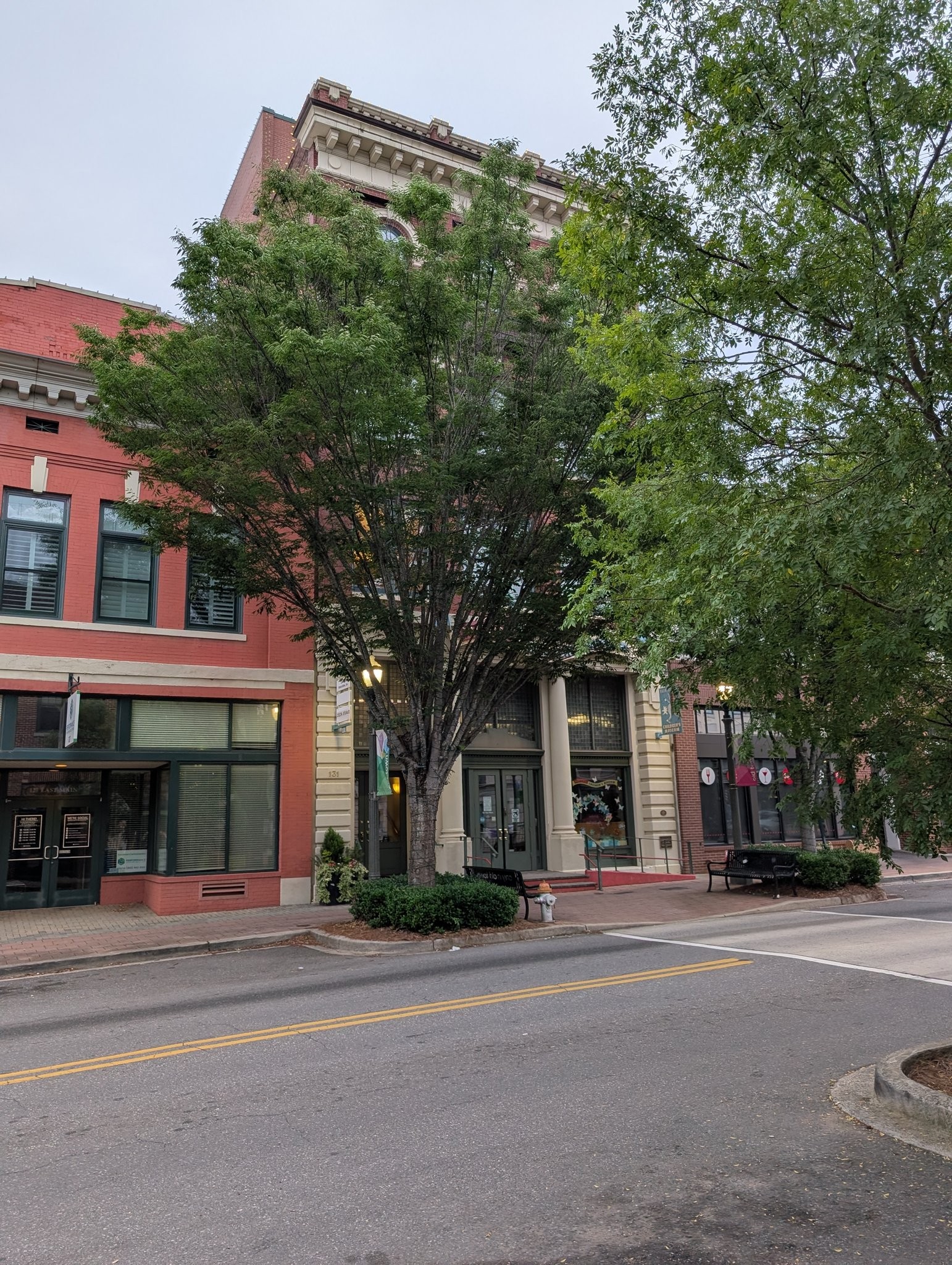
The People’s National Bank Building, constructed circa 1909–1910 in downtown Rock Hill, stands as one of the city’s most important early commercial landmarks and reflects the rapid economic growth that transformed Rock Hill during the opening decades of the twentieth century. Built during a period of expanding textile production, railroad commerce, and urban development, the structure symbolized the increasing sophistication and financial stability of the community. As one of the city’s principal banking institutions, People’s National Bank played a central role in financing local businesses, industrial expansion, and residential growth during Rock Hill’s emergence as a leading commercial center in the South Carolina Piedmont.
Architecturally, the building exemplifies the Classical Revival style commonly associated with early twentieth-century financial institutions. Constructed of brick and stone with refined ornamental detailing, the structure was designed to convey permanence, strength, and public confidence. Features such as large arched windows, decorative cornices, masonry pilasters, and an imposing street-level façade contributed to its prominence within the downtown streetscape. The careful use of classical architectural elements reflected national design trends in bank construction, where institutions sought to project stability and respectability through monumental architecture.
The People’s National Bank Building occupied a prominent place within Rock Hill’s growing business district during an era when Main Street developed into the city’s commercial and civic center. Surrounding storefronts, professional offices, hotels, and theaters created a vibrant urban environment fueled by the prosperity of the textile economy and the arrival of new residents and businesses. Buildings such as this one became symbols of civic ambition and economic confidence, reinforcing Rock Hill’s identity as a progressive and forward-looking community.
Today, the People’s National Bank Building remains an important part of Rock Hill’s historic downtown architectural fabric and serves as a lasting reminder of the city’s financial and commercial heritage. Its preservation contributes to the historical continuity and character of downtown Rock Hill while illustrating the architectural sophistication and economic optimism that defined the city during the years immediately preceding World War I.