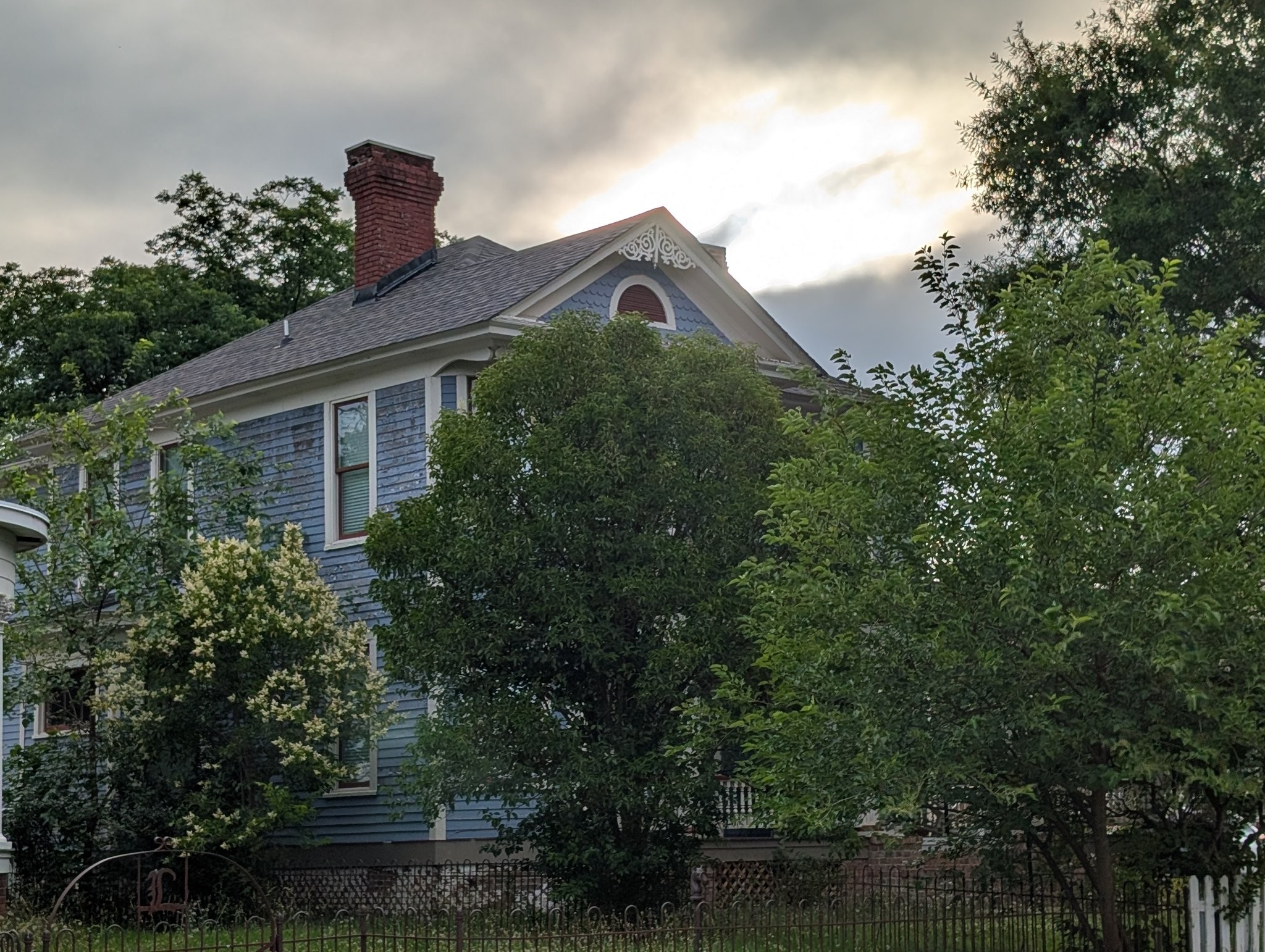
The Blackmon House, constructed circa 1910 in Rock Hill, reflects the city’s remarkable period of expansion and prosperity during the early twentieth century. Built as Rock Hill emerged as a thriving textile, railroad, and commercial center in the South Carolina Piedmont, the residence illustrates the growing wealth and stability of the city’s professional and business classes. Homes of this period represented both social standing and confidence in Rock Hill’s future, as new residential neighborhoods developed beyond the original downtown core to accommodate the city’s rapidly increasing population.
Architecturally, the Blackmon House embodies the transitional domestic styles popular during the first decades of the twentieth century, combining elements of late Victorian design with the more restrained influences of the Colonial Revival and early Craftsman movements. The residence is distinguished by its broad porch, prominent rooflines, decorative wood detailing, and balanced composition, features that emphasized comfort, craftsmanship, and architectural sophistication. Such houses were designed not only as family residences but also as visible symbols of permanence and respectability within a growing community.
The house is significant for its association with the Blackmon family and the broader pattern of residential development that shaped Rock Hill during the industrial boom years. Families who occupied homes of this scale often played important roles in local commerce, manufacturing, education, or civic life, contributing to the economic and social progress of the community. The residence also contributes to the historic character of Rock Hill’s early twentieth-century neighborhoods, many of which retain substantial collections of period homes reflecting the city’s architectural diversity and historical growth.
Today, the Blackmon House remains an important part of Rock Hill’s residential heritage and serves as a reminder of the city’s transformation during the years surrounding 1910. Its continued preservation helps illustrate the craftsmanship, architectural trends, and community aspirations that defined Rock Hill during one of its most influential eras of development.