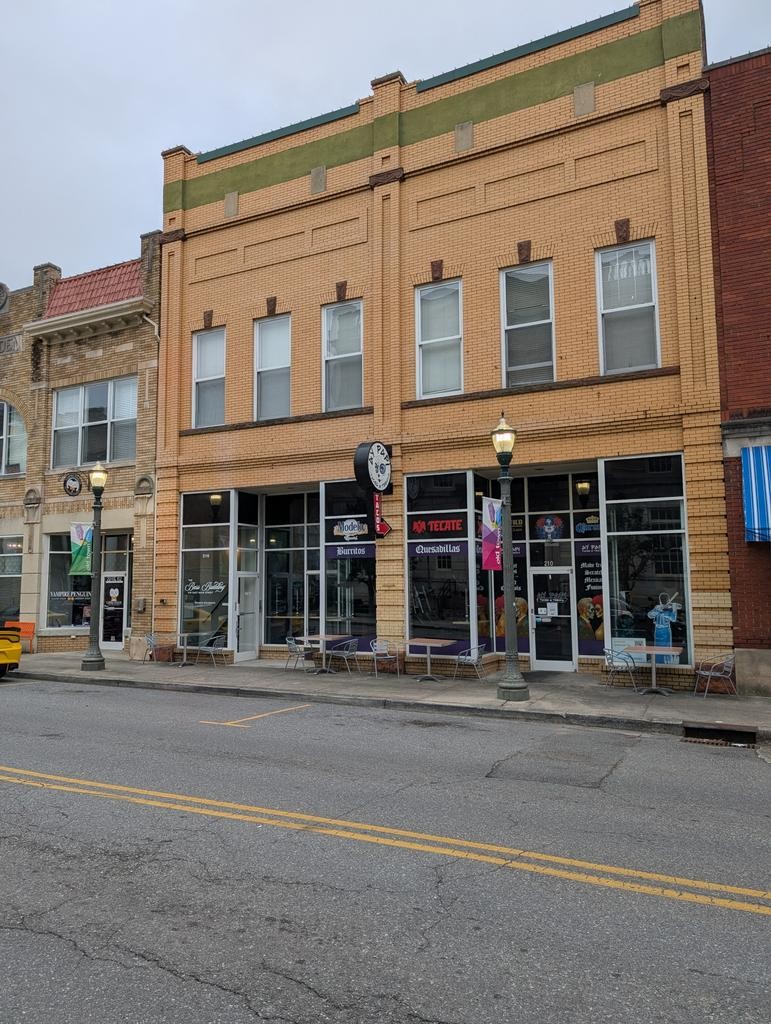
The Bass Furniture Building, constructed circa 1925 in downtown Rock Hill, stands as a significant reminder of the city’s commercial expansion during the prosperous years of the early twentieth century. Erected during a period when Rock Hill was emerging as one of the leading textile and mercantile centers of the South Carolina Piedmont, the building housed one of the city’s prominent furniture and home furnishing businesses, serving a growing population attracted by the region’s booming industrial economy. Its location within the downtown commercial district reflected the importance of Main Street as the center of retail, finance, and civic activity during the 1920s.
Architecturally, the Bass Furniture Building exemplifies the restrained yet substantial commercial design common to Southern downtown business blocks of the era. Constructed of brick with a broad storefront façade, the structure featured large display windows intended to showcase merchandise to passing pedestrians and motorists, while decorative masonry detailing and parapet ornamentation added visual distinction to the streetscape. Buildings of this type were designed to convey permanence, stability, and modernity, qualities highly valued by merchants competing within Rock Hill’s increasingly active commercial environment.
The building contributed to the transformation of downtown Rock Hill into a sophisticated urban business district during the interwar years. Furniture stores such as Bass Furniture played an essential role in supporting the needs of a rapidly expanding middle class, particularly as new residential neighborhoods developed throughout the city. The store’s presence reflected changing patterns of domestic life and consumer culture, when stylish furnishings and modern household goods became symbols of prosperity and progress for many Rock Hill families.
Today, the Bass Furniture Building remains an important component of Rock Hill’s historic downtown architectural fabric. Its survival helps illustrate the city’s commercial development during the 1920s and preserves the character of an era when locally owned businesses dominated Main Street commerce. As part of Rock Hill’s historic business district, the building continues to represent the entrepreneurial spirit, economic optimism, and architectural legacy that shaped the city during one of its most dynamic periods of growth.