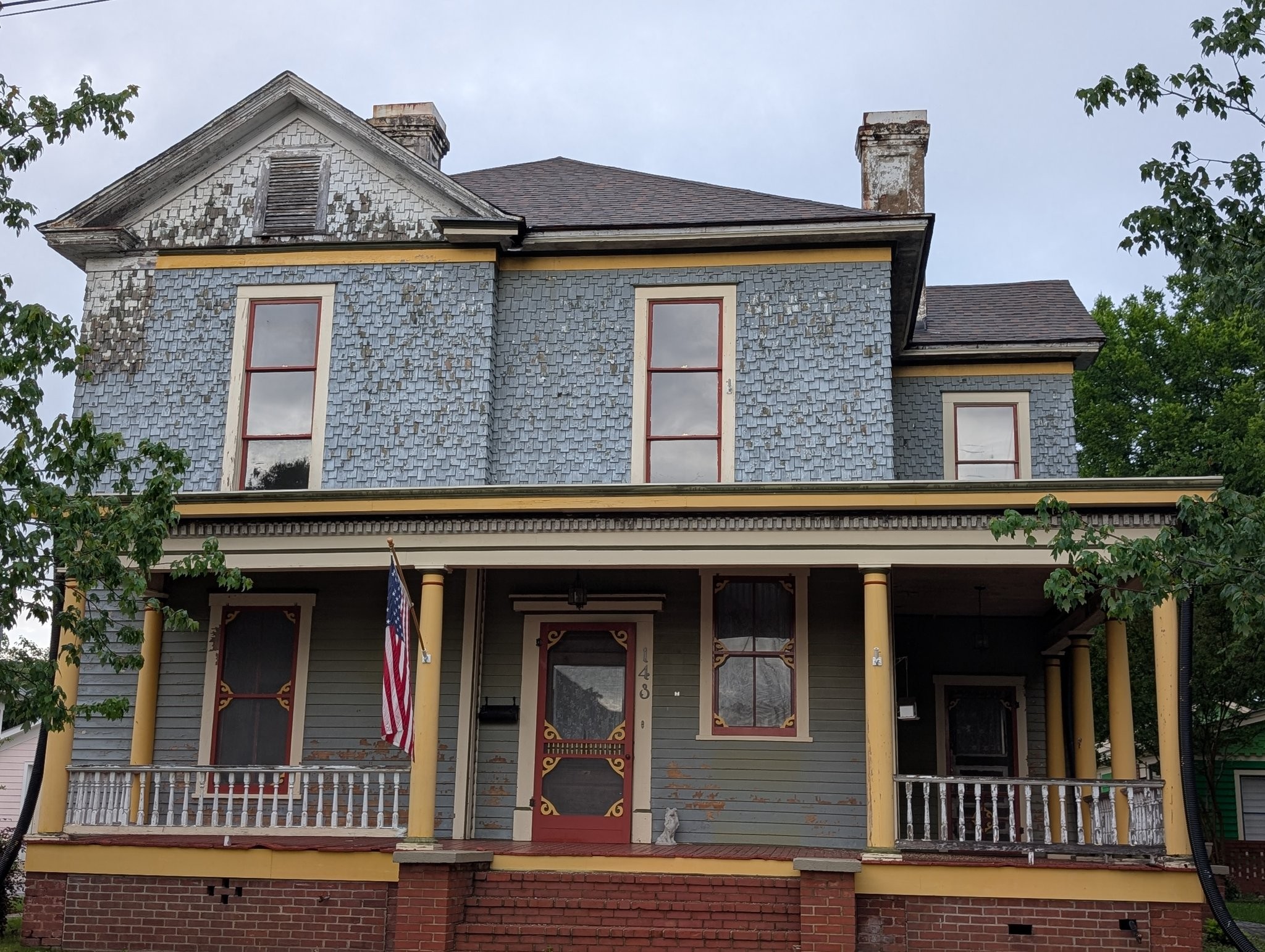
Steed house ca 1905
Constructed around 1905, the Steed House reflects Rock Hill’s steady residential expansion during a period of sustained industrial and civic growth in the early twentieth century. Built for members of the Steed family, whose name is associated with York County’s broader agricultural, commercial, and community history, the residence represents the aspirations of a city that had firmly established itself as a regional hub of textile manufacturing, railroad commerce, and trade.
The house emerged during a time when Rock Hill’s established neighborhoods were becoming more densely developed with substantial, well-crafted homes for merchants, professionals, and families connected to the city’s growing industrial base. As textile mills expanded and downtown commerce flourished, residential construction increasingly emphasized permanence, comfort, and stylistic refinement. The Steed House fits within this pattern as part of the wave of early twentieth-century homes that helped define Rock Hill’s architectural identity.
Architecturally, the Steed House likely reflects the transitional design influences common in Rock Hill around 1905, blending the asymmetry and decorative detailing of the late Victorian period with the emerging order and restraint of the Colonial Revival style. Typical features of such homes included inviting front porches, varied rooflines, and carefully executed woodwork, all intended to convey both craftsmanship and respectability. The design would have balanced visual interest with practicality, suited to the climate and social patterns of the Southern Piedmont.
The construction of the Steed House coincided with a broader phase of urban and neighborhood development in Rock Hill, as improved infrastructure and growing prosperity encouraged the creation of cohesive residential districts. These neighborhoods were often shaped by families who contributed to the city’s economic and civic life, reinforcing a sense of stability and community identity through architecture and settlement patterns.
Today, the Steed House remains an important part of Rock Hill’s historic residential fabric. Through its association with a locally established family and its representation of early twentieth-century domestic design, it provides valuable insight into the city’s social history, architectural evolution, and patterns of growth during a formative period of expansion and modernization.