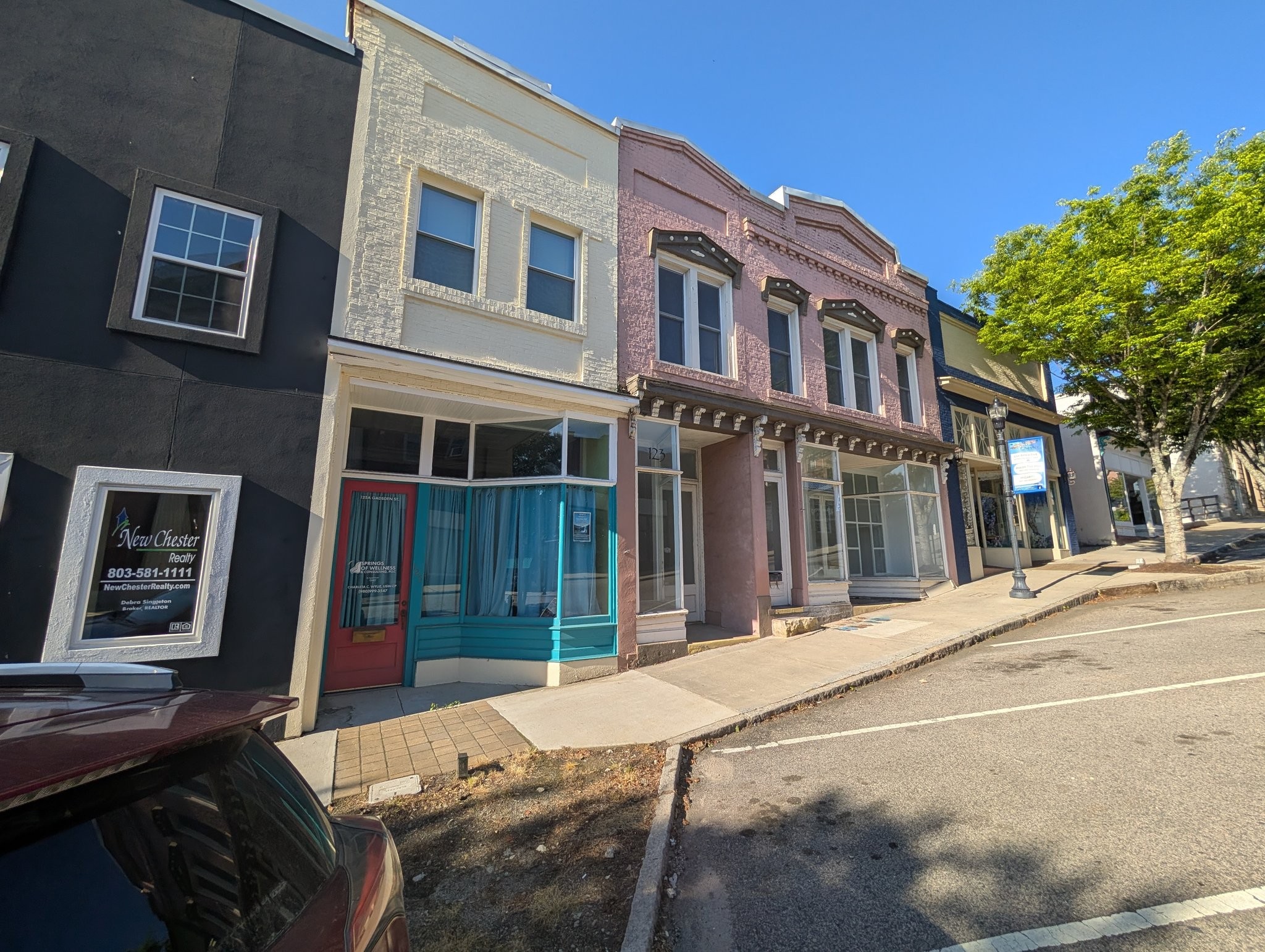
Walter and Henry’s Building
Walter and Henry’s Building, constructed circa 1897 in Chester, stands as a representative example of late nineteenth-century commercial architecture, reflecting the optimism and entrepreneurial energy that defined Chester’s downtown business district during the post-Reconstruction and early industrial growth period. Built at a time when local commerce was expanding and storefront architecture was becoming more formalized, the structure embodies both practicality and understated stylistic refinement.
The exterior likely follows the traditional two-part commercial block typology common in small Southern towns of the era. A ground-floor storefront would have been designed for visibility and accessibility, featuring large display windows flanking a central recessed entry to accommodate retail activity. These expansive panes not only showcased goods but also helped activate the street with light and transparency, reinforcing the building’s commercial purpose.
Above the storefront, the upper façade would have presented a more restrained and orderly composition, typically with evenly spaced windows aligned to residential or office use. Brick construction would have provided durability and fire resistance, while subtle decorative detailing such as corbelled brickwork, stone lintels, or a modest pressed-metal cornice would have added visual interest without compromising the building’s functional character.
The roofline is likely flat or gently sloped, concealed behind a parapet that contributes to the structure’s strong street presence. This parapet may have been accented with simple ornamentation or a nameplate identifying the business, reinforcing its identity within the commercial corridor.
Inside, the ground floor would have been organized for retail or service use, with open floor space, high ceilings, and adaptable layouts suited to changing commercial needs. The upper level may have housed offices or lodging rooms, reflecting the mixed-use nature typical of downtown buildings in this period. Interior finishes would have been modest but durable, emphasizing utility while maintaining a sense of order and professionalism.
As part of Chester’s late nineteenth-century commercial development, Walter and Henry’s Building contributes to the historic rhythm and architectural continuity of the town’s business district. It reflects a period when local enterprise shaped the built environment, leaving behind structures that continue to define the character and history of the community’s downtown core.