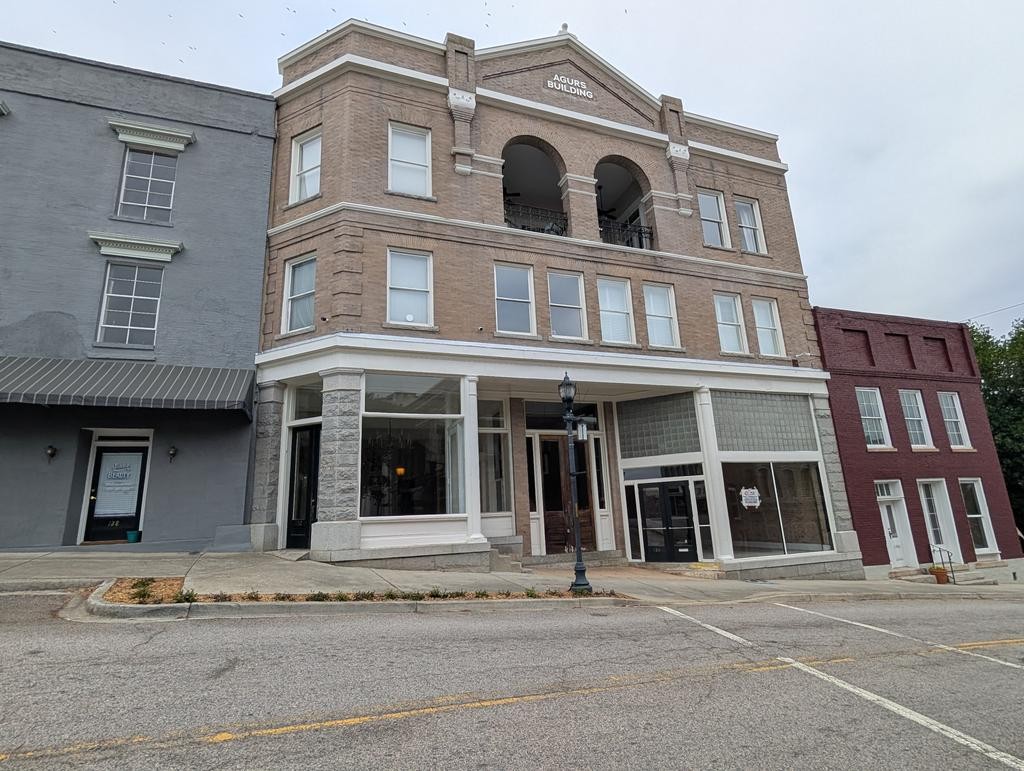
Wylie–Augurs Building (ca. 1905)
The Wylie–Augurs Building (ca. 1905) stands as a strong example of early 20th-century commercial development in Chester, reflecting a period when the town’s downtown district was solidifying into a cohesive and modern mercantile center. Erected during an era of steady economic growth following the turn of the century, the building embodies both practicality and the understated architectural confidence of small Southern cities entering the Progressive Era.
Typically designed in the early Commercial style, the Wylie–Augurs Building presents a straightforward, rectangular form emphasizing function over ornament. Its brick masonry construction conveys durability and permanence, while also providing the fire resistance essential for densely built downtown blocks. The façade is organized in a clear vertical and horizontal rhythm, with evenly spaced window bays that reinforce its orderly, utilitarian character.
At street level, large storefront openings would have originally framed display windows and recessed entrances, drawing foot traffic into retail spaces that served the daily needs of Chester’s residents. These ground-floor commercial areas were designed for flexibility, accommodating a variety of businesses over time. Above, upper floors typically housed offices, storage, or possibly light residential use, reflecting the mixed-use nature of early 20th-century downtown buildings.
Subtle architectural detailing such as brick corbelling along the cornice, modest lintels above windows, and a parapet that crowns the structure adds texture without diminishing its functional emphasis. The overall composition prioritizes proportion and rhythm, aligning the building with its neighboring commercial structures to create a unified streetscape.
Inside, the building would have featured adaptable interiors, with open floor plans on the lower level and partitioned spaces above. Wood flooring, plaster walls, and simple trim work would have been typical finishes, supporting both commercial activity and long-term tenant flexibility.
As part of Chester’s historic commercial core, the Wylie–Augurs Building remains a tangible reminder of the town’s early 20th-century prosperity and urban development. It reflects the entrepreneurial energy, architectural restraint, and civic growth that defined this formative period in Chester’s downtown history.