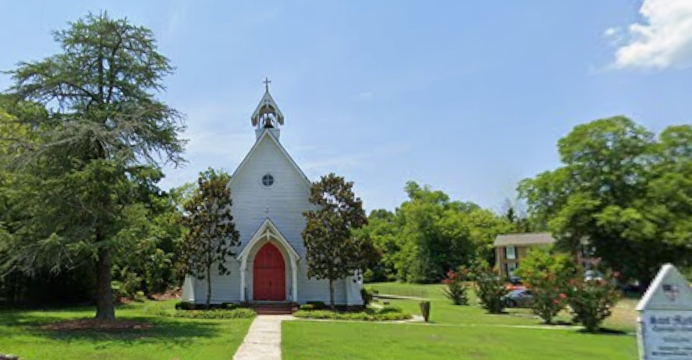
St. Mark’s Episcopal Church (ca. 1878)
The St. Mark’s Episcopal Church (ca. 1878) stands as a refined expression of post-Reconstruction ecclesiastical architecture in Chester, reflecting both spiritual continuity and renewed civic optimism in the decades following the Reconstruction Era. Established during a period of rebuilding and cultural redefinition across the South, the church embodies the Episcopal tradition’s emphasis on liturgical order, architectural dignity, and community presence.
Architecturally, St. Mark’s is typically associated with the Gothic Revival style, which gained widespread popularity for Episcopal churches in the late 19th century. The structure is often defined by its vertical emphasis, steeply pitched roof, and pointed-arch openings that evoke medieval ecclesiastical precedents. Constructed of brick or locally sourced materials, the building balances permanence with a sense of spiritual aspiration.
The façade is generally composed with restrained symmetry, featuring a central entrance that may be framed by a modest porch or recessed archway. Tall lancet windows line the nave, allowing natural light to filter into the sanctuary while reinforcing the building’s upward visual rhythm. Decorative detailing, while present, remains controlled limited to subtle wood trim, simple buttresses, or modest tracery that highlights rather than overwhelms the structure’s form.
Inside, the church follows a traditional nave-and-chancel plan, oriented to support Episcopal liturgical practice. Wooden pews are arranged in orderly rows facing a raised chancel, where the altar serves as the focal point of worship. The interior is typically characterized by high ceilings, exposed woodwork or plaster finishes, and an atmosphere of quiet reverence enhanced by filtered light through stained or clear lancet windows.
As a cornerstone of Chester’s religious landscape, St. Mark’s Episcopal Church reflects the town’s late 19th-century growth and stabilization. It stands not only as a place of worship but also as a cultural landmark one that embodies the architectural ideals, spiritual traditions, and community resilience of its era.