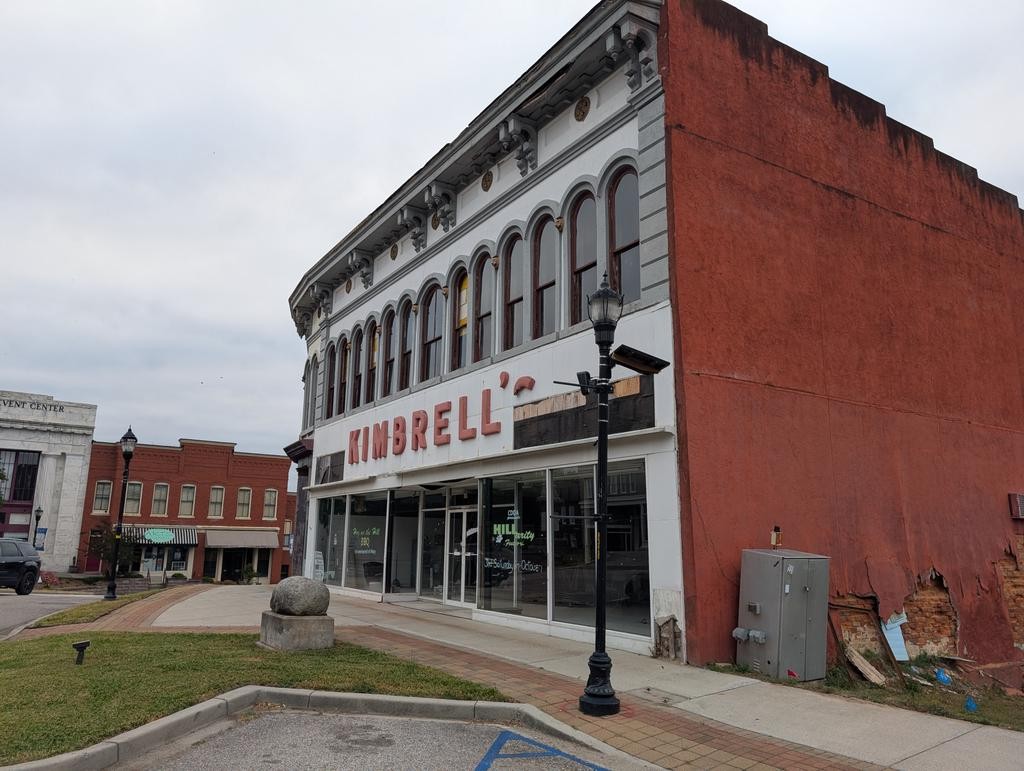
The Joseph Wylie Building (ca. 1875) stands as a durable reflection of postbellum commercial growth in Chester, embodying the resilience and steady rebuilding that followed the American Civil War. Constructed during a period when local economies were reestablishing themselves, the building illustrates the practical yet confident architectural approach of late 19th-century mercantile development.
Typically defined by its straightforward rectangular massing, the Joseph Wylie Building is constructed of brick, a material chosen for both permanence and fire resistance. The façade is organized into clearly defined bays, with a traditional two-story arrangement that separates commercial activity below from offices or storage above. At street level, large storefront openings would have originally accommodated display windows and recessed entries, inviting pedestrian engagement and trade.
The upper façade presents a rhythm of evenly spaced windows, often capped with simple lintels or understated decorative detailing. Brick corbelling along the roofline may provide a modest ornamental flourish, lending texture while maintaining the building’s overall restraint. The structure’s balanced proportions and solid construction speak to both function and longevity.
Inside, the building would have been flexible in use, adapting to the needs of various businesses over time. Open floor plans on the ground level supported retail or service functions, while upper floors offered workspace or lodging. This adaptability ensured the building’s continued relevance as Chester evolved through the late 19th and early 20th centuries.
As part of the historic streetscape, the Joseph Wylie Building remains an important link to Chester’s commercial heritage. Its enduring presence reflects not only the architectural traditions of the era but also the determination and enterprise that shaped the town’s recovery and growth in the decades following the Civil War.