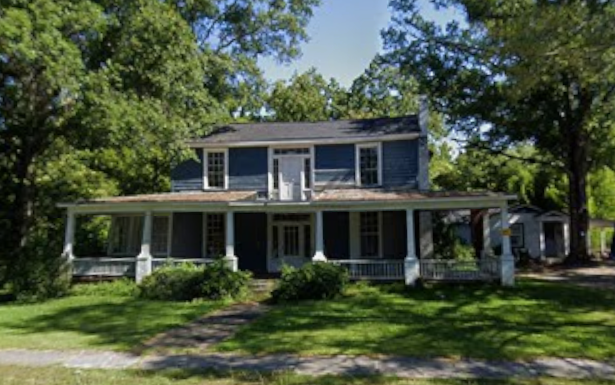
John A. Hafner House (ca. 1896)
The John A. Hafner House (ca. 1896) stands as a refined example of late 19th-century residential design in Chester, reflecting a period when architectural expression became more ornate and individualized. Constructed during an era of economic recovery and growth following the Reconstruction Era, the home embodies the craftsmanship and stylistic flourish that defined the Victorian age in the American South.
Often associated with Queen Anne or late Victorian influences, the house is distinguished by its asymmetrical massing and visually engaging roofline. Steeply pitched gables, projecting bays, and possibly a corner tower or turret create a dynamic silhouette, while the façade is enriched with decorative woodwork ornamental brackets, spindlework, and patterned shingles that add texture and complexity.
A welcoming front porch, frequently wrapping along one or more sides of the house, serves as both a functional and social space. Supported by turned posts and accented with intricate balustrades, the porch exemplifies the era’s attention to detail and hospitality. Tall, narrow windows often arranged in varied configurations allow natural light to animate the interior while contributing to the building’s vertical emphasis.
Inside, the John A. Hafner House would typically feature a more fluid floor plan than earlier homes, with interconnected rooms designed for both formal entertaining and everyday living. High ceilings, decorative moldings, and possibly stained glass or carved wood elements enhance the interior’s sense of richness. Fireplaces with detailed mantels anchor the principal rooms, reflecting both comfort and status.
As a residence tied to Chester’s turn-of-the-century development, the house represents a shift toward architectural exuberance and modernity. Today, it endures as a character-defining landmark, illustrating the evolving tastes, skilled craftsmanship, and community pride that shaped Chester at the close of the 19th century.