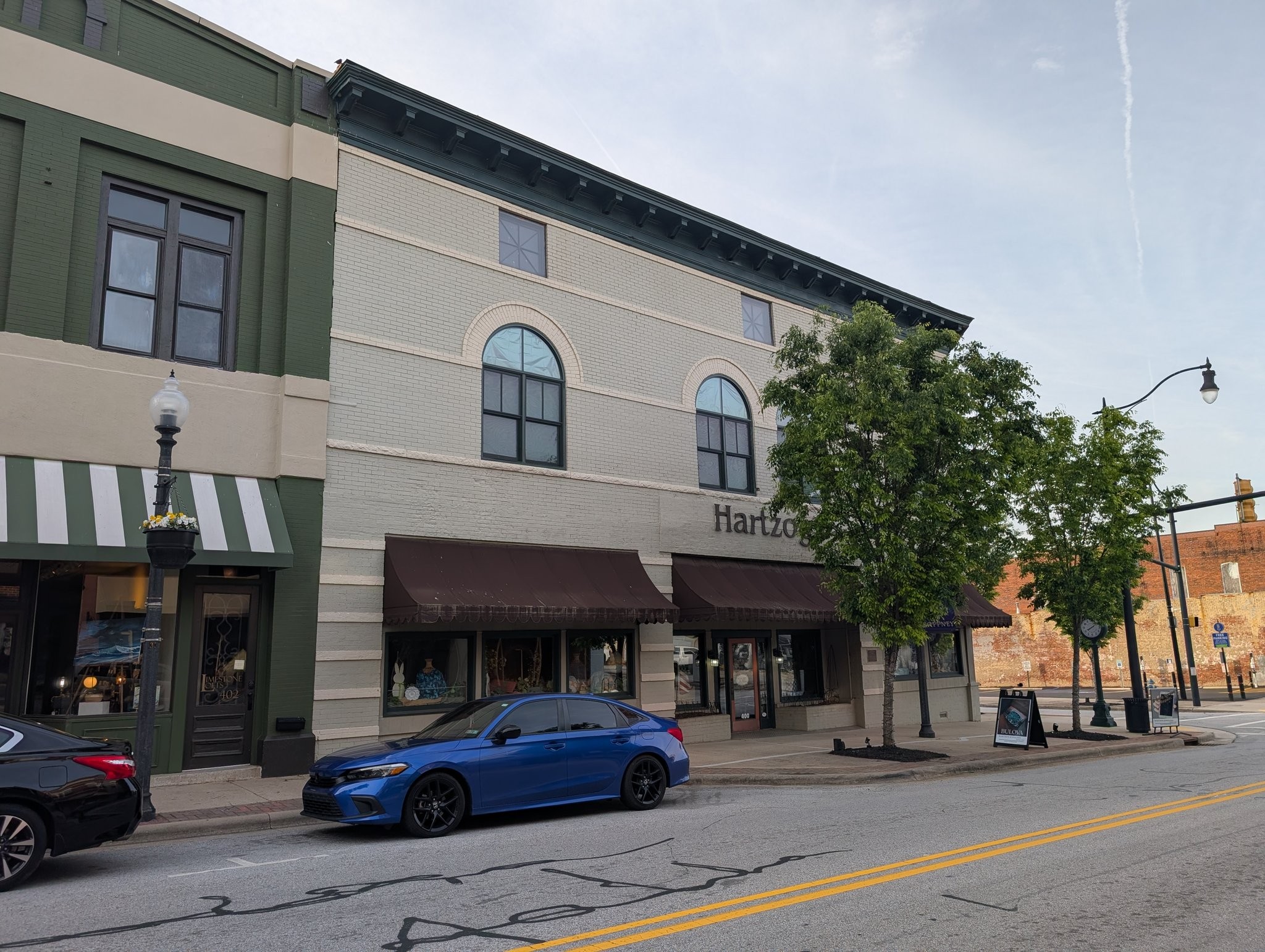
Star theatre in Gaffney
Emerging at the dawn of a new century, the Star Theatre, constructed circa 1903, brought with it the promise of entertainment, culture, and shared experience to the growing community of Gaffney. More than a building, it stood as a gathering place where stories flickered to life, performances captivated audiences, and the rhythms of small-town life found a stage.
The theatre’s façade likely reflected the commercial character of the era, with a brick exterior that conveyed both durability and presence along the streetscape. Subtle decorative elements—arched openings, corbelled brickwork, or a modest cornice would have added visual interest, while the marquee or entry canopy announced its purpose with quiet excitement. Large front openings invited patrons inside, creating an approachable and lively street-level experience.
Within, the Star Theatre would have opened into a space designed for immersion and connection. High ceilings and an open auditorium allowed for clear sightlines, while a stage or screen became the focal point of the interior. Whether hosting traveling performers, early motion pictures, or community events, the space was crafted to bring people together under one roof.
Seating, likely arranged in rows or gentle tiers, reflected the practical needs of the time, while architectural details remained simple, allowing the performances themselves to take center stage. Lighting, both natural and artificial, would have been carefully considered to enhance the experience, transitioning audiences from the brightness of the street into the dim, expectant atmosphere within.
Constructed with sturdy materials and thoughtful design, the Star Theatre was built to serve not just as a venue, but as a cultural cornerstone an anchor of entertainment in an era when such spaces were vital to community life.
Set within the historic fabric of Gaffney, the Star Theatre stands as a symbol of early 20th-century social life, where entertainment was shared, stories were collective, and the magic of performance created lasting memories. Its legacy endures as a reminder of a time when even the smallest towns embraced the wonder of the stage and screen.