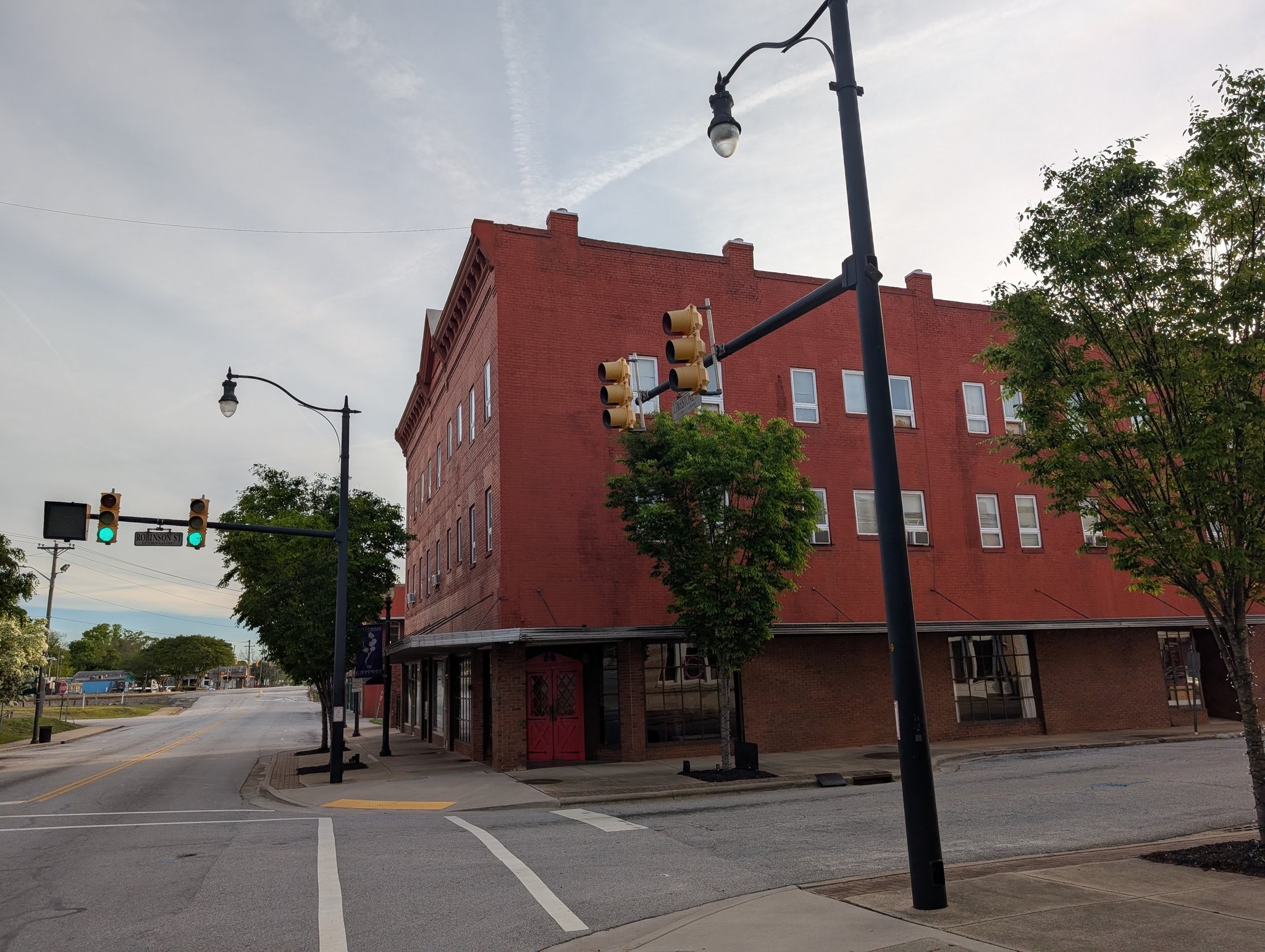
Settlemyer building in Gaffney
Rising from the early commercial heart of Gaffney, the Settlemyer Building, constructed circa 1903, stands as a lasting emblem of the town’s turn-of-the-century growth and entrepreneurial spirit. Its presence reflects a time when downtown streets were defined by craftsmanship, durability, and a quiet confidence in the future.
The building’s façade embodies the restrained ornamentation typical of early 20th-century commercial architecture, where function and form worked in harmony. Brick construction anchors the structure with permanence, while carefully considered detailing corbelled brickwork, decorative lintels, or subtle cornice lines adds depth and character without excess. Large storefront openings at street level were designed to welcome commerce, allowing natural light to pour into display spaces and inviting passersby into the rhythm of daily trade.
Above, the upper façade likely features evenly spaced windows, creating a sense of balance and proportion while providing light and ventilation to offices, storage, or residential quarters. These windows, framed with understated detailing, contribute to the building’s cohesive and enduring aesthetic.
Inside, the Settlemyer Building would have originally offered open, adaptable commercial space on the ground floor, with high ceilings and sturdy materials designed to accommodate a variety of uses. Upper levels, often more intimate in scale, reflect the mixed-use nature common to the era—where business and daily life existed under one roof.
The building’s structural integrity, rooted in traditional masonry techniques, speaks to a period when commercial structures were built not only for immediate need but for longevity. Every element from brickwork to layout was intended to withstand both time and change.
Positioned within Gaffney’s historic downtown fabric, the Settlemyer Building remains more than a relic of the past; it is a continuing thread in the story of the city’s development. Its enduring form captures the energy of a growing community at the dawn of the 20th century, preserving the legacy of commerce, craftsmanship, and small-town resilience.