Union Hardware Store
The Union Hardware Store, established around 1880 in the growing commercial center of Union, stands as a reflection of the town’s steady recovery and expanding enterprise in the years following Reconstruction. At a time when communities across the South were rebuilding their economies, businesses like this one played a vital role in supplying the tools and materials necessary for both daily life and long-term development.
Serving farmers, builders, and tradesmen alike, the hardware store provided essential goods ranging from hand tools and nails to farming implements and household fixtures. In an era when self-sufficiency and craftsmanship were central to rural and small-town life, such establishments were indispensable, supporting everything from crop production to home construction and repair. The store would have been a familiar and well-frequented stop, where practical needs met local knowledge and conversation.
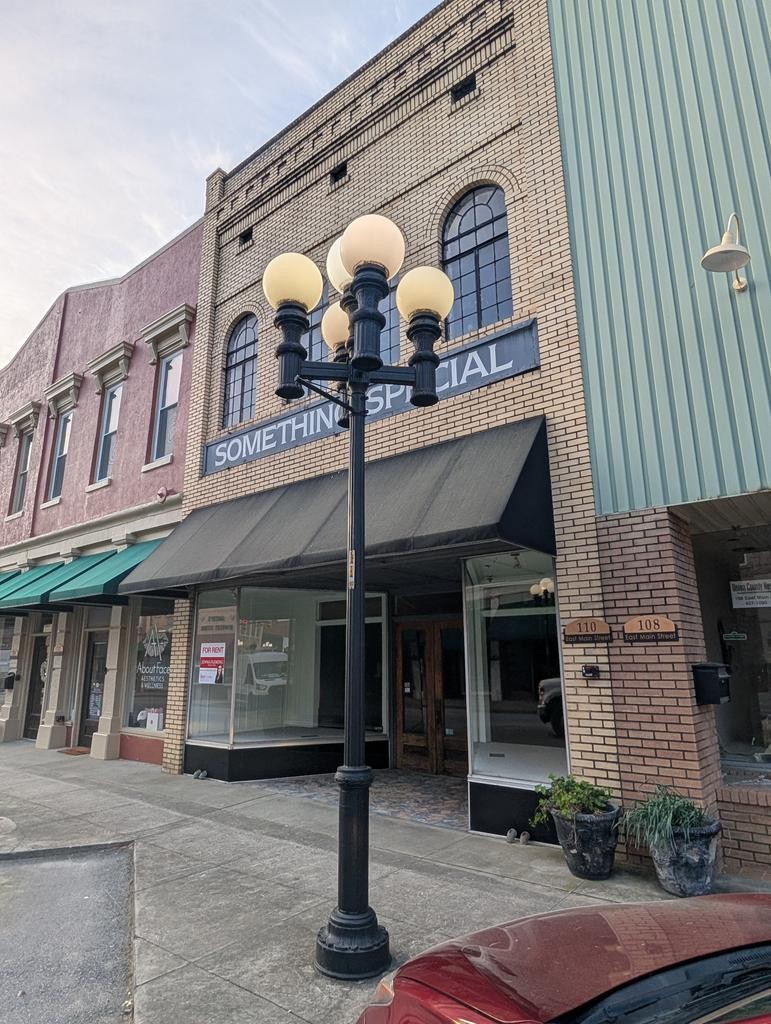
Architecturally, the Union Hardware Store likely followed the straightforward commercial styles of the late nineteenth century. Constructed of brick or heavy timber, the building would have featured a simple but sturdy façade, with large front windows designed to display merchandise and invite customers inside. A recessed entrance and wooden or metal awning may have provided shelter and shade, while the interior would have been organized for both accessibility and storage, with shelves, bins, and counters arranged to handle a wide range of goods.
Its location within Union’s business district placed it at the heart of the town’s economic activity, often near other general stores, warehouses, and service-oriented establishments. As rail connections expanded and transportation improved, the hardware store would have benefited from increased access to regional suppliers, allowing it to offer a broader selection of goods to a growing customer base.
More than just a place of commerce, the Union Hardware Store functioned as a social hub where residents exchanged news, advice, and ideas. It embodied the industrious spirit of a community determined to rebuild and thrive, providing both the physical tools and the communal connections that supported progress.