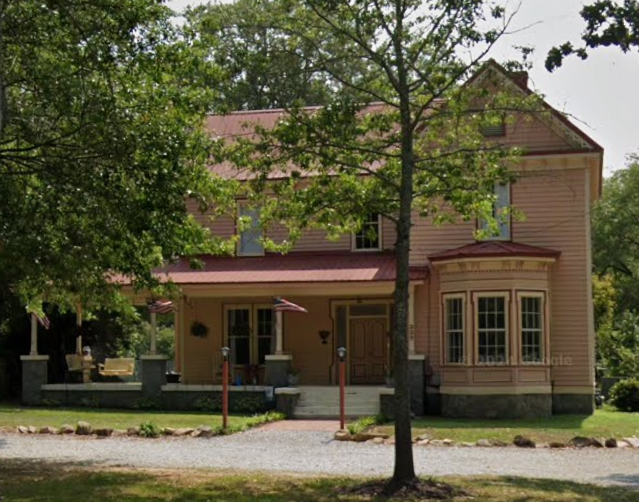
Kinard House in Ninety Six
The Kinard House, dating to around 1885, stands as a quiet yet enduring reflection of late nineteenth-century life in rural South Carolina. Built during a period of gradual recovery and transformation following the Civil War, the home embodies both resilience and refinement, offering a glimpse into the architectural tastes and domestic rhythms of its era.
Constructed with a careful eye toward balance and proportion, the Kinard House likely reflects elements of the vernacular farmhouse tradition, with subtle influences from popular styles of the time such as Queen Anne or Folk Victorian design. Its form would have emphasized practicality while still incorporating decorative touches—perhaps seen in its porch detailing, window surrounds, or roofline accents—that conveyed a sense of pride and permanence.
As with many homes of its period, the Kinard House would have served not only as a residence but as the center of family and community life. Within its walls, generations experienced the daily patterns of work and rest that defined the agrarian South, while its surrounding land likely played a vital role in sustaining the household. The home’s layout, materials, and craftsmanship speak to a time when construction relied heavily on local resources and skilled hands.
Over the decades, the Kinard House has borne witness to sweeping changes—from Reconstruction and the rise of the New South to the modernization of the twentieth century. Yet it remains rooted in its original character, preserving the stories of those who built it and called it home.