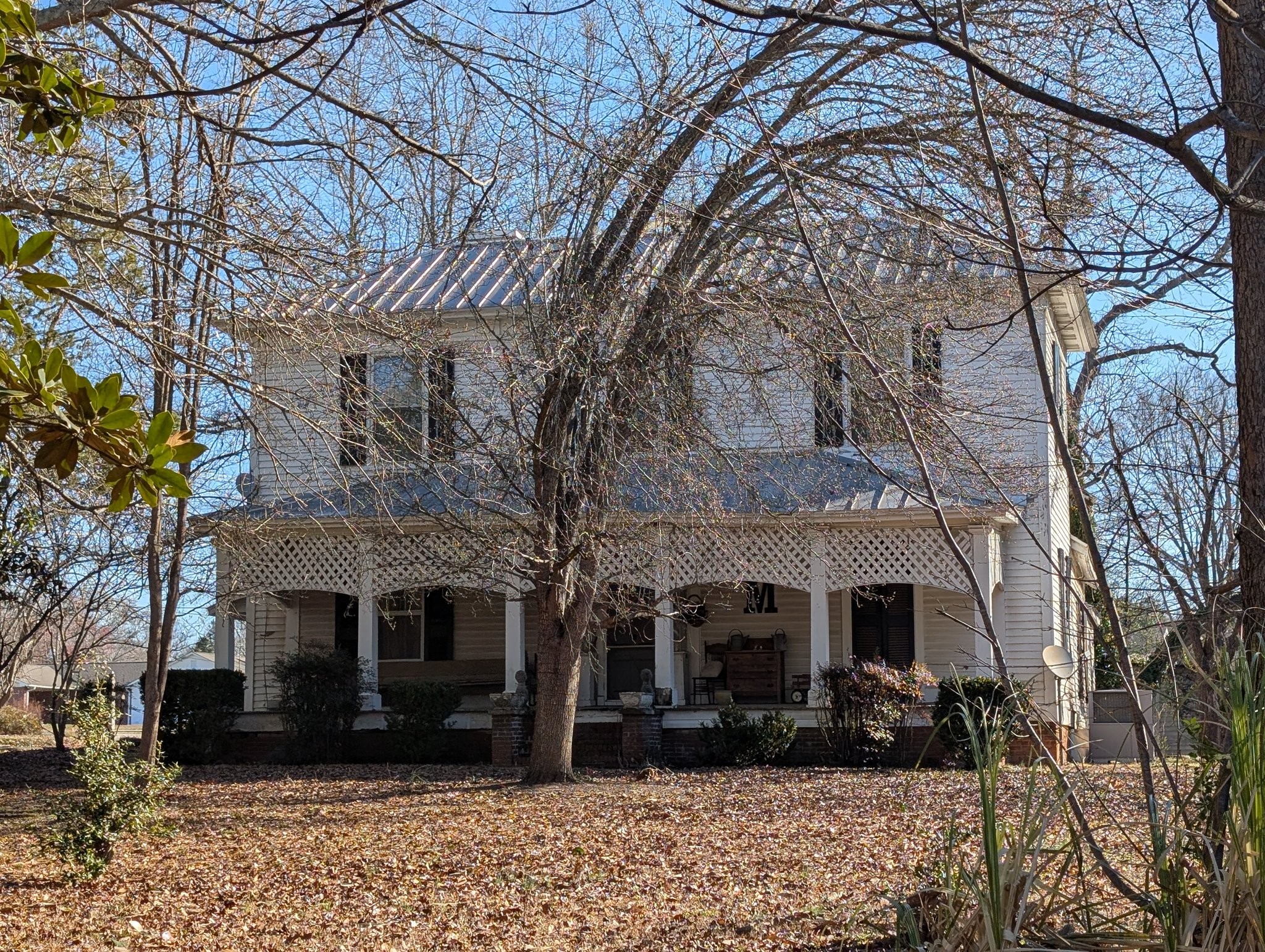
Simpson House
The Simpson House stands as an important reminder of Pendleton’s early development and architectural heritage, reflecting the town’s origins as a planned community and cultural center in the South Carolina Upstate. Constructed during the nineteenth century, the house embodies the craftsmanship, proportion, and restraint that characterized domestic architecture in Pendleton’s formative years.
Pendleton was established in the early 1800s as a carefully designed village, notable for its classical plan, broad streets, and strong emphasis on education, religion, and civic order. Within this setting, the Simpson House served as a private residence for members of a family whose life and work were intertwined with the town’s social and economic growth. The home provided a setting for everyday domestic life while standing as a symbol of stability and permanence during a period of regional expansion.
Architecturally, the Simpson House reflects traditional building practices of its era, incorporating simple yet refined design elements that balanced function and aesthetic appeal. Its form and detailing align with Pendleton’s distinctive architectural character, which drew inspiration from classical traditions adapted to local materials and construction methods. The durability of the structure attests to the skill of the craftsmen who built it and the care of successive occupants who maintained it.
Throughout its history, the Simpson House witnessed profound transformations in Pendleton and the surrounding region, from antebellum prosperity through the upheaval of the Civil War and into the social and economic changes of the late nineteenth and early twentieth centuries. Despite these shifts, the house remained a steady presence, preserving a tangible connection to the town’s early identity.