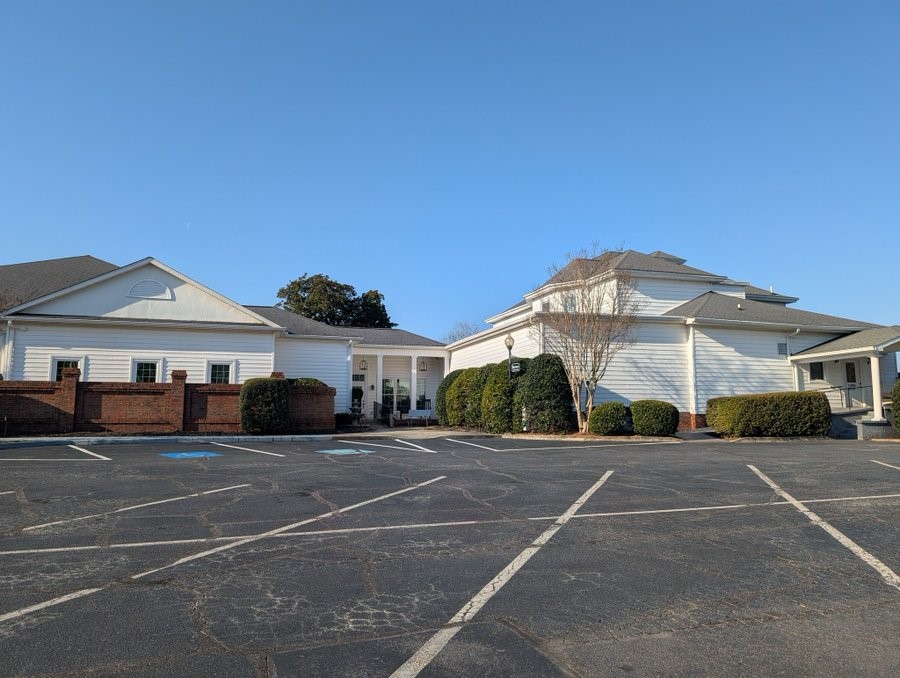
Harris Funeral Home (Sears House)
The Harris Funeral Home, historically known as the Sears House, stands as a dignified architectural and cultural landmark in Abbeville, reflecting more than a century of local history, craftsmanship, and community service. Originally constructed in the late nineteenth century, the residence exemplifies the prosperity and refinement that characterized Abbeville during its post–Civil War recovery and economic resurgence.
Built as a private home, the Sears House was designed in a style typical of the period, featuring balanced proportions, refined woodwork, and welcoming porches that emphasized both comfort and hospitality. Its craftsmanship reflected the pride and ambition of Abbeville’s emerging professional and mercantile class, whose homes shaped the town’s graceful residential streetscapes. The house quickly became a prominent fixture within the growing community, symbolizing stability and social standing.
During the early twentieth century, the residence entered a new chapter when it became associated with the Harris family and was adapted for use as a funeral home. This transition marked the building’s evolution from private domestic space to an institution of public service. As Harris Funeral Home, the structure assumed a deeply important role in the emotional and cultural life of Abbeville, serving generations of families during moments of remembrance, reflection, and loss.
The architectural character of the original home lent itself naturally to this purpose. Its formal rooms, high ceilings, and gracious layout provided a setting of dignity and quiet reverence, while its residential appearance offered a sense of warmth and familiarity. These qualities helped establish Harris Funeral Home as a trusted and comforting presence within the community, reinforcing traditions of respect, compassion, and service.
For decades, Harris Funeral Home stood at the center of Abbeville’s social fabric, bearing witness to countless stories of family, faith, and perseverance. Its continued use ensured the preservation of the historic structure, allowing original architectural features and craftsmanship to endure while adapting to modern needs. The building thus represents a successful example of adaptive reuse, preserving historic integrity while serving evolving community functions.