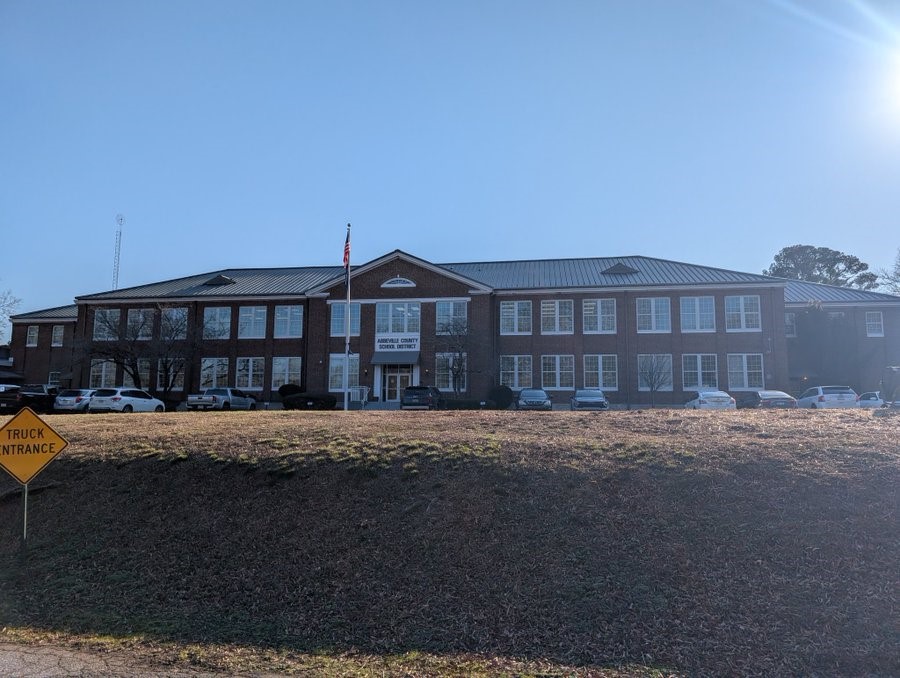
Greenville Street Elementary School
Greenville Street Elementary School long stood as one of Abbeville’s most familiar and beloved educational institutions, shaping generations of students during the town’s mid-twentieth-century growth. Situated along Greenville Street near Tinsley Field, the school occupied a central place in both the physical and social landscape of Abbeville, serving as a daily gathering point for children, teachers, families, and neighbors alike.
Constructed in the early decades of the twentieth century, Greenville Street Elementary reflected the era’s commitment to public education and civic investment. Its sturdy brick construction, symmetrical design, and broad windows provided both durability and natural light, creating a practical yet welcoming learning environment. For decades, the school educated students from first through seventh grades, anchoring childhood memories for much of Abbeville’s population.
Beyond academics, Greenville Street Elementary functioned as a true community hub. The school grounds and the adjacent Tinsley Field were closely linked to Abbeville High School athletics and town events. Friday night football games drew crowds from across the county, while neighborhood children spent afternoons and weekends playing in the schoolyard. Seasonal programs, including May Day celebrations and student performances, became cherished traditions that reinforced community bonds and local pride.
Throughout the mid-1900s, Greenville Street Elementary served thousands of children during a period of profound social change. Students passed through its halls during the years of postwar growth, school consolidation, and eventual desegregation, making the building a silent witness to shifting educational policies and cultural transformation in Abbeville and the broader South.
As educational facilities modernized and grade structures evolved, Greenville Street Elementary eventually ceased functioning as a traditional school. Rather than being abandoned, the building found new life as an administrative center for the Abbeville County School District, preserving its longstanding role in public service. This adaptive reuse ensured that the structure remained a functional and symbolic part of Abbeville’s civic framework.