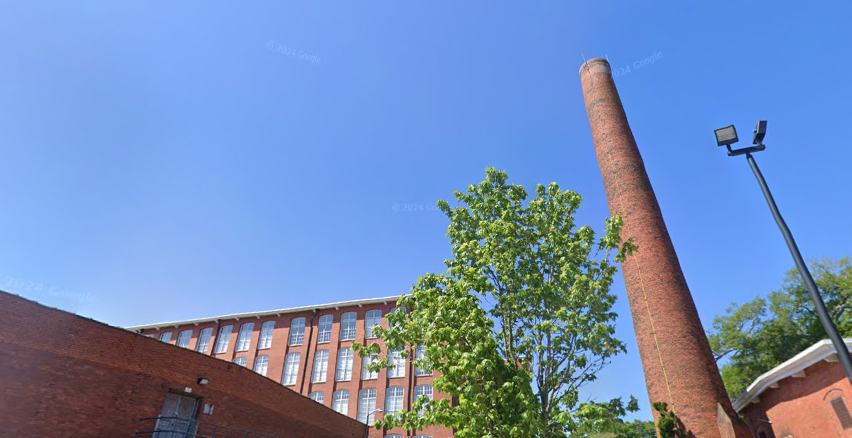
Oakland Mill in Newberry
Oakland Mill in Newberry stands as a significant testament to the region’s industrial and architectural heritage, reflecting the economic growth, technological innovation, and community life of the late 19th and early 20th centuries. As a centerpiece of Newberry’s industrial landscape, the mill embodies the functional ingenuity and enduring craftsmanship characteristic of Southern textile manufacturing during this period.
The mill complex is composed of sturdy brick and timber-frame structures, their simple, rectilinear forms emphasizing utility while also exhibiting a quiet dignity. Large multi-pane windows punctuate the façades, admitting ample light and ventilation to interior workspaces, while broad entrances and loading areas speak to the operational needs of a bustling industrial facility. The rooflines, though practical, are carefully proportioned, and subtle brick detailing at corners, lintels, and eaves lends the buildings a refined aesthetic that balances functionality with craftsmanship.
Inside, the mill was organized to accommodate efficient production flows, with spacious floors for machinery, high ceilings for ventilation, and durable materials designed to withstand the rigors of industrial use. The architectural design reflects a thoughtful integration of form and function, where structural integrity and worker efficiency were paramount, yet the buildings still convey an understated visual rhythm and order.
Historically, Oakland Mill played a central role in Newberry’s economic development, providing employment, fostering community growth, and influencing the town’s social fabric. The mill’s presence contributed not only to industrial prosperity but also to the creation of a mill village, where workers’ housing and communal structures reflected the interdependence of industry and daily life.
Today, Oakland Mill endures as a landmark of Newberry’s industrial heritage. Its brick façades, expansive windows, and enduring structural details continue to convey the ambition, ingenuity, and craftsmanship of its builders, offering a tangible connection to the town’s industrial past and the generations who labored within its walls.