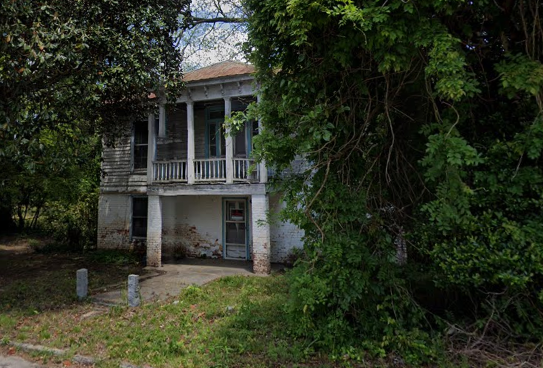
Livingston Cottage in Newberry
The Livingston Cottage in Newberry stands as a charming example of late 19th- and early 20th-century residential architecture, reflecting both the modest elegance and craftsmanship characteristic of smaller Southern homes of the period. Though more intimate in scale than some of the town’s grander residences, the cottage conveys warmth, refinement, and a careful attention to proportion and detail, making it a noteworthy part of Newberry’s architectural heritage.
The one- to one-and-a-half-story frame structure is defined by a gently pitched roof and a prominent front-facing gable, giving the façade visual interest and a welcoming presence. A broad front porch, supported by turned wooden posts and accented with simple but tasteful wood trim, serves as both a functional space for outdoor living and a social threshold that connects the interior of the home to the rhythms of the neighborhood. Tall, narrow sash windows punctuate the exterior walls, providing light to the interior and contributing to a harmonious and balanced façade.
Ornamental detailing on the Livingston Cottage is restrained yet deliberate. Bracketed eaves, subtle gable trim, and finely crafted porch elements provide visual texture and rhythm without overwhelming the structure’s modest proportions. Inside, the layout would have been designed for comfort and practicality, with well-proportioned rooms, high ceilings, and wood finishes that create an inviting and livable environment.
Historically, the cottage is tied to the Livingston family, whose presence and contributions were woven into the social and civic life of Newberry. While modest in scale, the residence embodies the values and aspirations of its occupants, serving as a tangible witness to everyday life, family histories, and the development of the town’s residential character.
Today, the Livingston Cottage endures as a valued element of Newberry’s architectural heritage. Its porch, gables, and thoughtfully crafted details continue to convey the charm, craftsmanship, and care of its builders, offering a window into the domestic life and architectural traditions of a Southern town at the turn of the century.