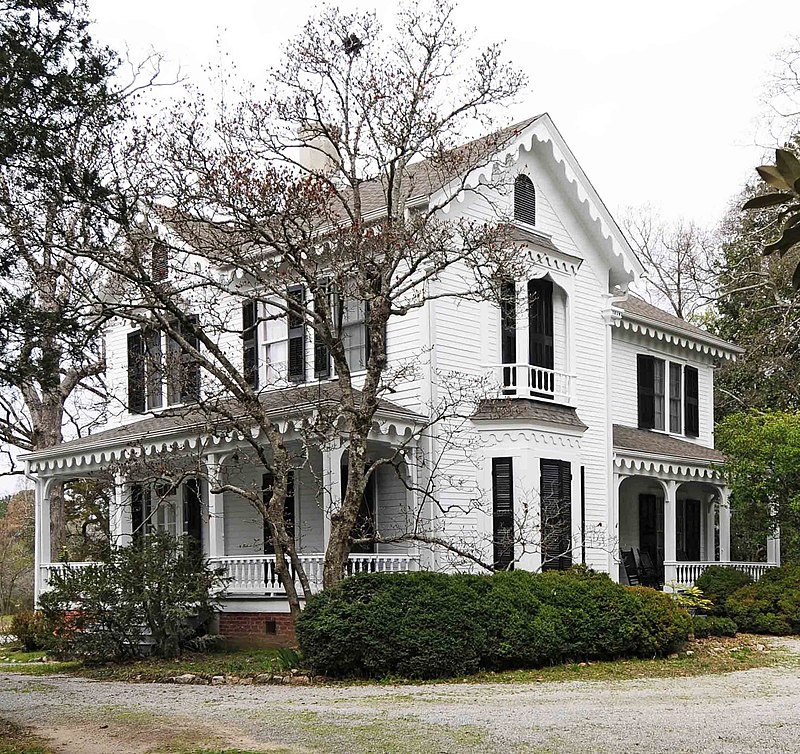
Governor Thomas B. Jeter House
Governor Thomas B. Jeter House remains one of Union’s most distinguished sons, a man whose life bridged the world of local community and the broader sweep of South Carolina’s history. Born and raised in Union District, Jeter grew into a figure of steady leadership, remembered not only for his brief but notable service as Governor, but also for the enduring influence he carried in public life. His story is one of civic responsibility, personal integrity, and deep ties to the soil and people of his home.
Jeter’s early years reflected the values of his region—commitment to education, a respect for law, and a strong sense of public duty. Trained in the law, he soon became a voice of reason and principle in state affairs, admired for his even temperament and careful judgment. When he rose to the governorship in 1880, he did so at a moment of transition, guiding South Carolina with a steady hand during the final months of Wade Hampton’s term. Though his time as Governor was brief, it carried significance: Jeter embodied the qualities of a leader who valued service over ambition, stability over division.
Beyond his political life, Thomas B. Jeter’s legacy is deeply rooted in Union itself. He was a man of the town as much as of the state, shaping local institutions, encouraging civic life, and investing in the future of his community. His home and presence were symbols of continuity, reminders that leadership is strongest when grounded in place and people.
Today, the memory of Governor Thomas B. Jeter endures as part of Union’s proud heritage. His life reminds us that influence need not always be measured in length of service, but in the integrity with which one serves. In his story, Union finds both inspiration and example—a testament to how one individual, firmly rooted in community, can leave a mark on history that time cannot erase.