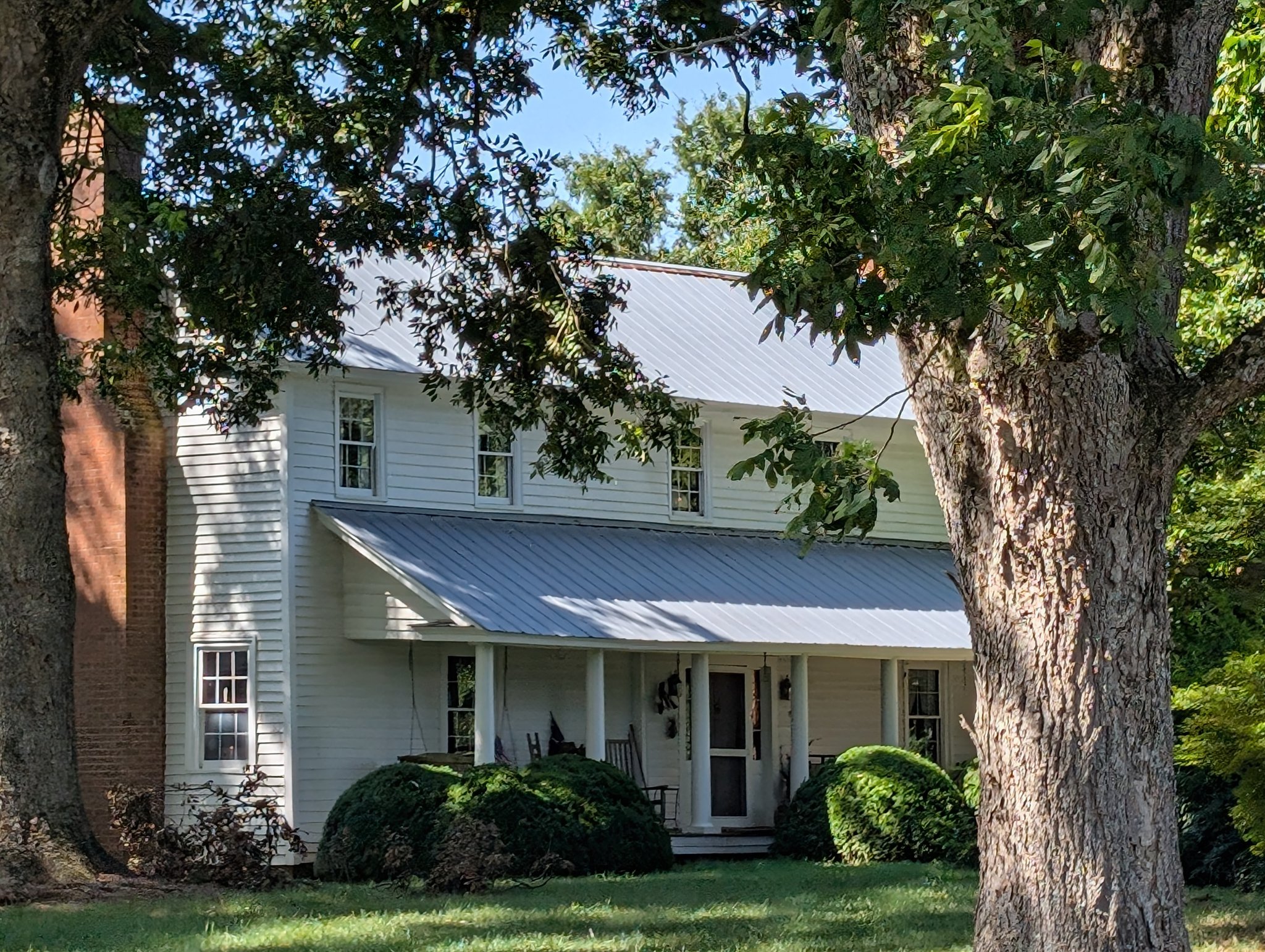
George Salmon House
The George Salmon House, also known as the C. Douglas Wilson Farm, rests along SC Highway 414, about 1.8 miles west of US 25 in Greenville County. It is intimately tied to one of the area’s earliest settlers, George Salmon, a skilled surveyor who helped divide Cherokee lands and establish the North Carolina–South Carolina boundary in the late 18th century.
Originally constructed around 1784 as a simple log cabin by the nineteen-year-old Salmon, the house evolved over time into a gracious two-story I‑House—also referred to as a “plantation plain” style—integrating the original log structure and brace-and-tenon extensions atop a brick foundation under a gable roof.
In the late 19th century a kitchen wing was appended to the rear, and in 1984 the entire house was relocated approximately 100 feet and rotated 90 degrees, along with a substantial addition to the rear wing that enhanced its functional layout while preserving historic form.
The interior reveals finely detailed craftsmanship uncommon among rural Upstate homes: mantels, beadwork, mortise-and-tenon joists and hand‑hewn logs testify to the care of its builders. Decorative interior detailing is recognized as a significant cultural asset in the county’s architectural history.
Nestled on approximately 2.6 acres, the property includes four contributing outbuildings: two early 20th-century multipurpose storage buildings, a small chicken coop, and a mid-to-late‑19th-century smokehouse. Notably, the smokehouse mirrors the main home’s architectural detailing in its gables, soffits, and cornice returns.
Salmon lived on the estate until his death in 1838, and is buried on the grounds. The property passed through several hands—including descendants and eventual owner C. Douglas Wilson—before its preservation efforts led to its inclusion on the National Register of Historic Places on January 21, 1988.
In essence, the George Salmon House gracefully traces a lineage from frontier log cabin to refined plantation home. Its architectural layers and surviving outbuildings speak eloquently of early settlement, rural refinement, and historic resilience along the North Saluda River—making it a cherished relic of Travelers Rest’s earliest chapter.